Building Outcomes Advisory
Design Buildings That Perform Beyond Mechanical Systems.
Reduce upfront construction and HVAC costs, improve indoor comfort, and lower long-term operating expenses by making the building itself part of the heating and cooling strategy.
✓ Lower mechanical capital requirements
✓ Better long-term building economics
✓ Stable radiant comfort
✓ Healthier indoor environments
We don't manufacture, supply, or specify mechanical equipment. We work alongside owners, developers, architects, and engineers early in design to improve project economics before construction and building performance long after occupancy
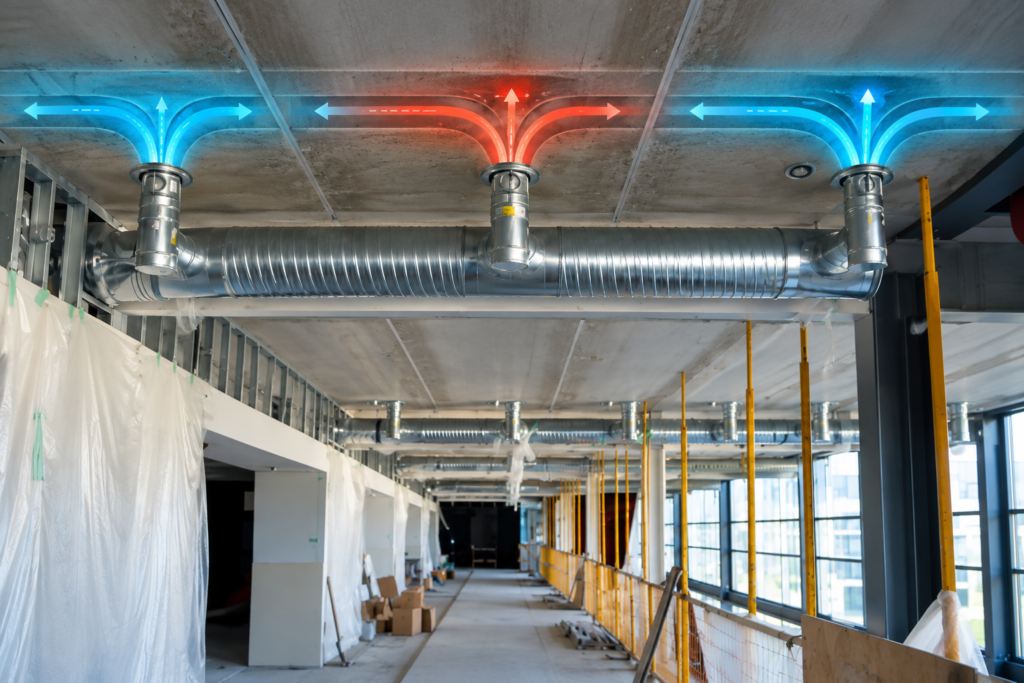
Conventional HVAC connected to ductwork embedded in the concrete structure for year-round thermal energy storage, stable radiant comfort, and responsive temperature control.
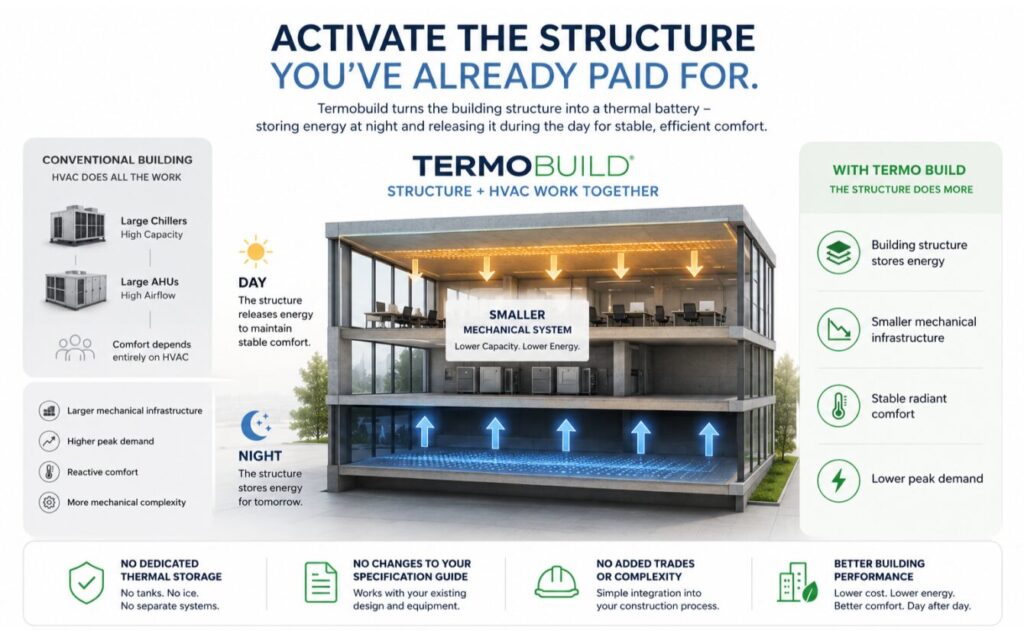
From Reactive Buildings to Proactive Comfort
Conventional buildings react to changing conditions – higher peak demand and less consistent comfort.
Termobuild makes buildings proactive.
By storing thermal energy in the structure, buildings become part of the heating and cooling strategy – delivering stable comfort while reducing system size, capital cost, and peak demand.
Universities | K-12 | Healthcare | Commercial | Residential | Civic | Data Centers
Project Results
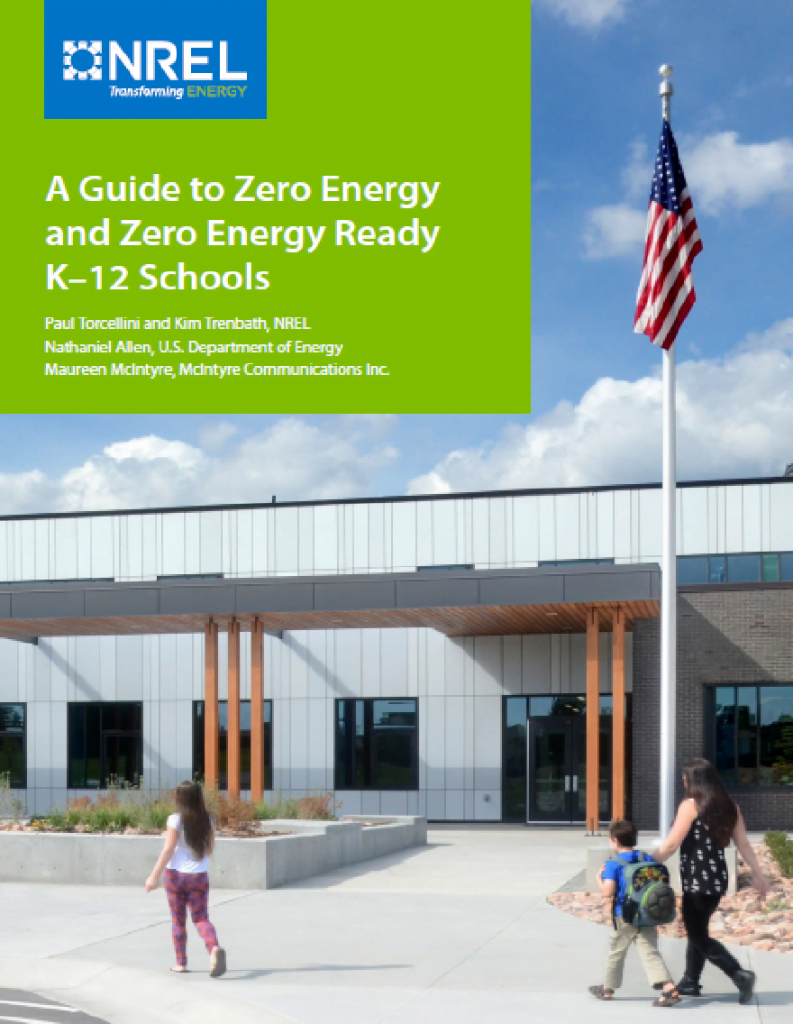
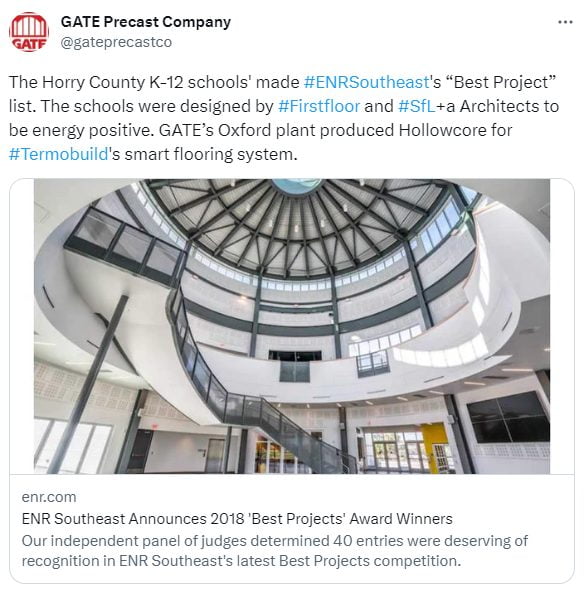
675,000 sq.ft K–12 Campus
Deployed across 5 schools using structural thermal energy storage
• ~10% reduction in mechanical capital cost
• 38% reduction in maintenance costs
• EUI reduced to 14–21 (vs ~150 typical)
• Stable radiant comfort throughout
Better Building Decisions Create Better Financial Outcomes.
When evaluated early in design, active thermal energy storage can reduce mechanical capital requirements, lower operating costs, and improve asset performance - without adding another building system.
Termobuild replaces a portion of the mechanical system — it is not an added layer of cost.
Proven at scale.
Proven over time.
Simple. Collaborative. Proven.
We engage early in design to evaluate system-level impact.
Project Evaluation
The first step is a review of your new building design or retrofit project. We start with mechanical design brief and architectural plans - to determine if our integration is a strong fit.
Financial Impact
We model expected reductions in mechanical infrastructure, peak demand, operating costs, and long-term performance.
Design Integration
Our engineering team works with your architect and mechanical engineer to integrate the system into the building design.
The Cost Isn't Evaluating Termobuild
The real cost may be designing a building without understanding whether its structure could reduce mechanical infrastructure, improve project economics, and lower operating costs for decades.
That's why every engagement begins with a Project Evaluation — not an equipment proposal.
Better Outcomes Start With Better Questions.
Can we reduce upfront construction costs while improving building performance?
Potentially. Integrating the building's thermal capacity into the design can allow engineers to evaluate smaller HVAC systems and less supporting mechanical infrastructure, while maintaining comfort and performance.
Explore the financial impact →Can we improve indoor comfort and fresh air without increasing HVAC costs?
In suitable designs, a coordinated approach to radiant comfort, ventilation, and thermal storage can improve temperature stability while reducing the load placed on mechanical systems. Indoor air quality depends on appropriate ventilation, filtration, and humidity control.
Explore comfort and fresh air →Can we reduce peak electricity demand without building a separate thermal storage plant?
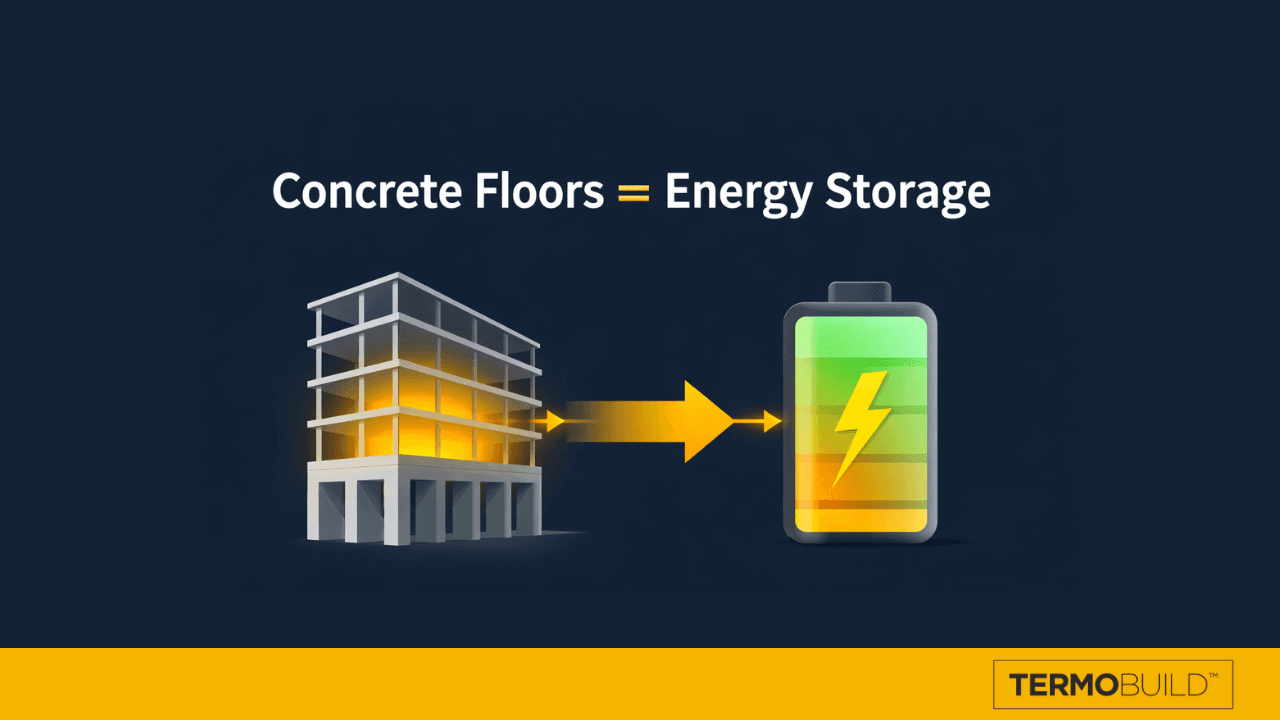
Yes. Building-integrated active thermal energy storage can use concrete already incorporated into the structure to shift heating and cooling loads without dedicated ice or chilled-water storage tanks.
See how the strategy works →See What This Means for Your Project
Every project presents different opportunities. Our Project Evaluation identifies where activating the building structure as long-term thermal energy storage can reduce mechanical infrastructure, improve project economics, and enhance building performance – before construction begins.
18+ years proven • 3.2M+ sq ft implemented • New construction & retrofit
Partners and Publications