Radiant Comfort & Fresh-Air Ventilation — Without a Separate Radiant System
Deliver radiant comfort and fresh-air ventilation using the structure itself — reducing mechanical systems while improving indoor conditions.
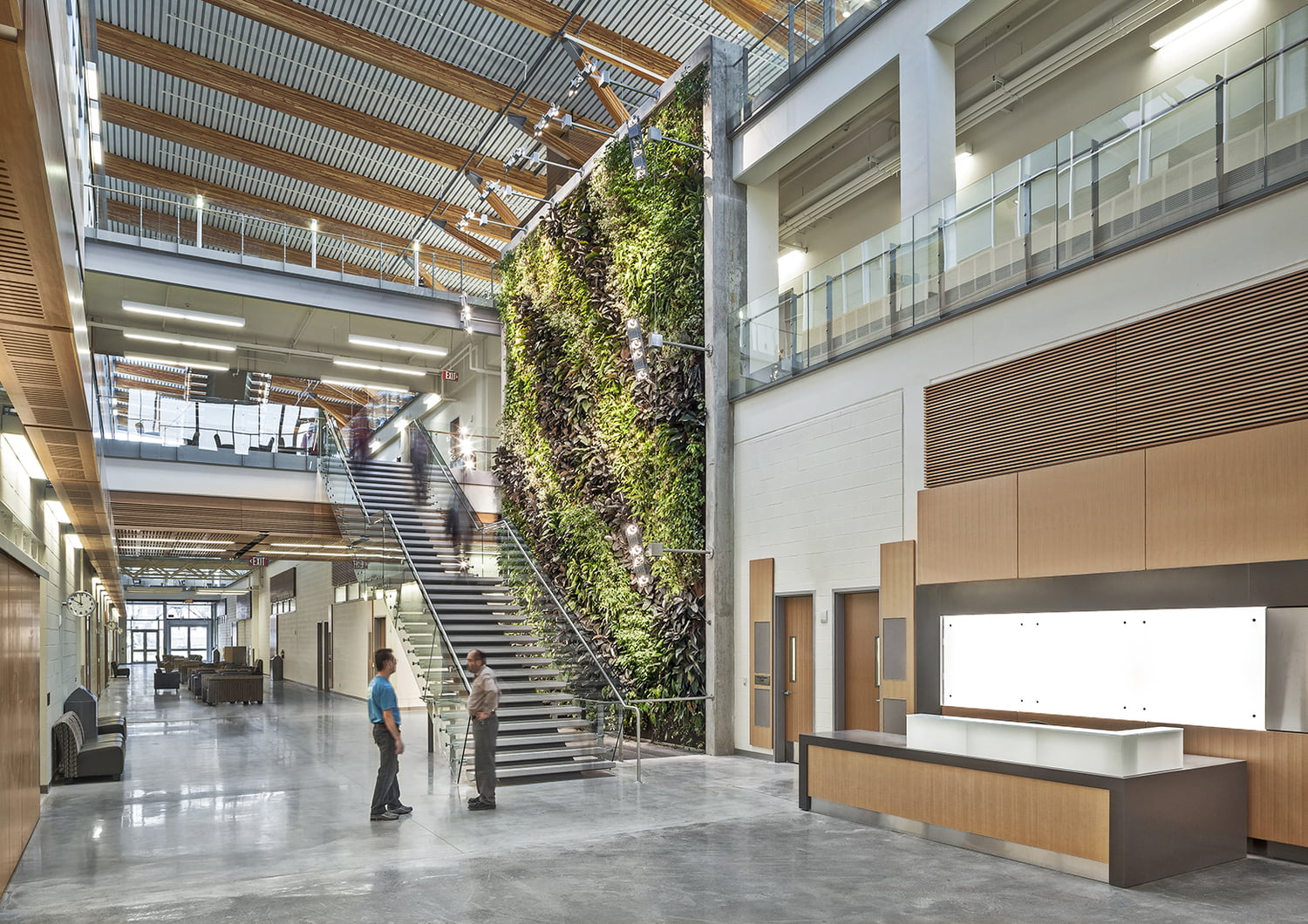
University of Windsor — completed with B+H Architects
Radiant Comfort Usually Gets Cut Because It Adds Complexity
Most design teams recognize the value of radiant comfort. The challenge is that traditional radiant systems often require additional infrastructure, coordination, and upfront cost — making them difficult to carry through budget review.
For owners and capital project teams, comfort is not just a design feature — it is part of the long-term building strategy. See what to evaluate before approving the building strategy.
Added Infrastructure
Traditional radiant systems often require separate piping, loops, panels, controls, and installation coordination.
Higher First Cost
Extra materials and added installation steps can make radiant comfort hard to justify in cost-sensitive projects.
Value Engineered Out
Even when the comfort benefit is clear, radiant systems are often removed before construction because they are seen as an add-on.
The Termobuild Difference
Termobuild changes the equation by using the structure itself as the thermal storage medium. Instead of adding a separate radiant system, the concrete structure helps store, release, and stabilize heating and cooling energy over time.
The Structure Becomes the Comfort System
Controlled airflow actively charges the concrete floors and ceilings, helping create a more stable indoor environment without relying only on forced-air heating and cooling.
Comfort Without Added Complexity
By activating the building mass, Termobuild can support radiant comfort while reducing HVAC loads, peak demand, and mechanical system dependency.
Why It Feels Better Inside
Comfort is not only about air temperature. People exchange heat with the surfaces around them. When those surfaces are more stable, the indoor environment feels more balanced, natural, and comfortable.
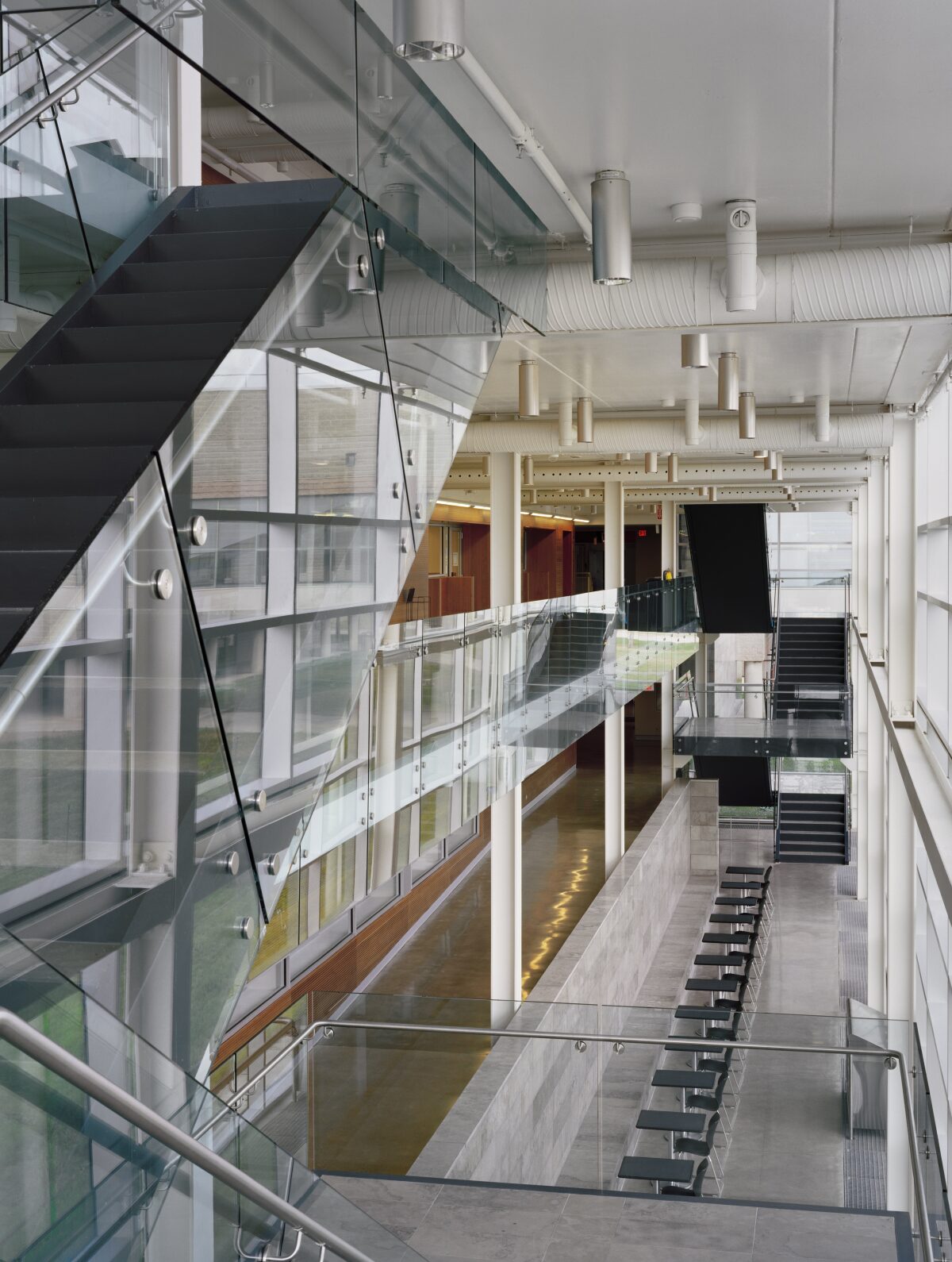
Completed project — high-performance interior environment with integrated structure and ventilation.
Stable Surface Temperatures
The structure stores and releases energy gradually, helping reduce hot and cold swings throughout the day.
Less Draft Dependency
Comfort is not created only by blowing heated or cooled air into the space. The building mass helps carry part of the load.
More Consistent Conditions
Because the structure acts as a thermal buffer, indoor conditions remain more stable even as outdoor conditions change.
Fresh-Air Ventilation Becomes a Design Advantage
Fresh-air performance is no longer just a mechanical conversation. See how rechargeable buildings can support healthier indoor environments, reduced recirculation, and more stable comfort without relying on oversized HVAC infrastructure. Explore the Fresh-Air Buildings Strategy →
Most of the year, ventilation can operate as a dedicated outdoor air system — delivering fresh air directly to occupants while maintaining stable comfort. Because the structure absorbs much of the thermal load, recirculation is often reduced or eliminated, supporting healthier indoor environments and improved air quality year-round.
Conventional Approach
- Air often handles both comfort and ventilation
- More reliance on recirculated indoor air
- Higher mechanical load during occupied hours
- More temperature swings and drafts
Termobuild Approach
- Structure helps handle thermal stability
- Ventilation can focus on fresh-air delivery
- Reduced reliance on recirculation
- More consistent comfort; fresh-air performance depends on ventilation design
How It Works — Without Added Systems
Air moves through the structure, storing energy in the concrete for gradual release — supporting both comfort and ventilation.
The structure stores and releases energy — allowing ventilation to focus on fresh air while maintaining stable comfort.
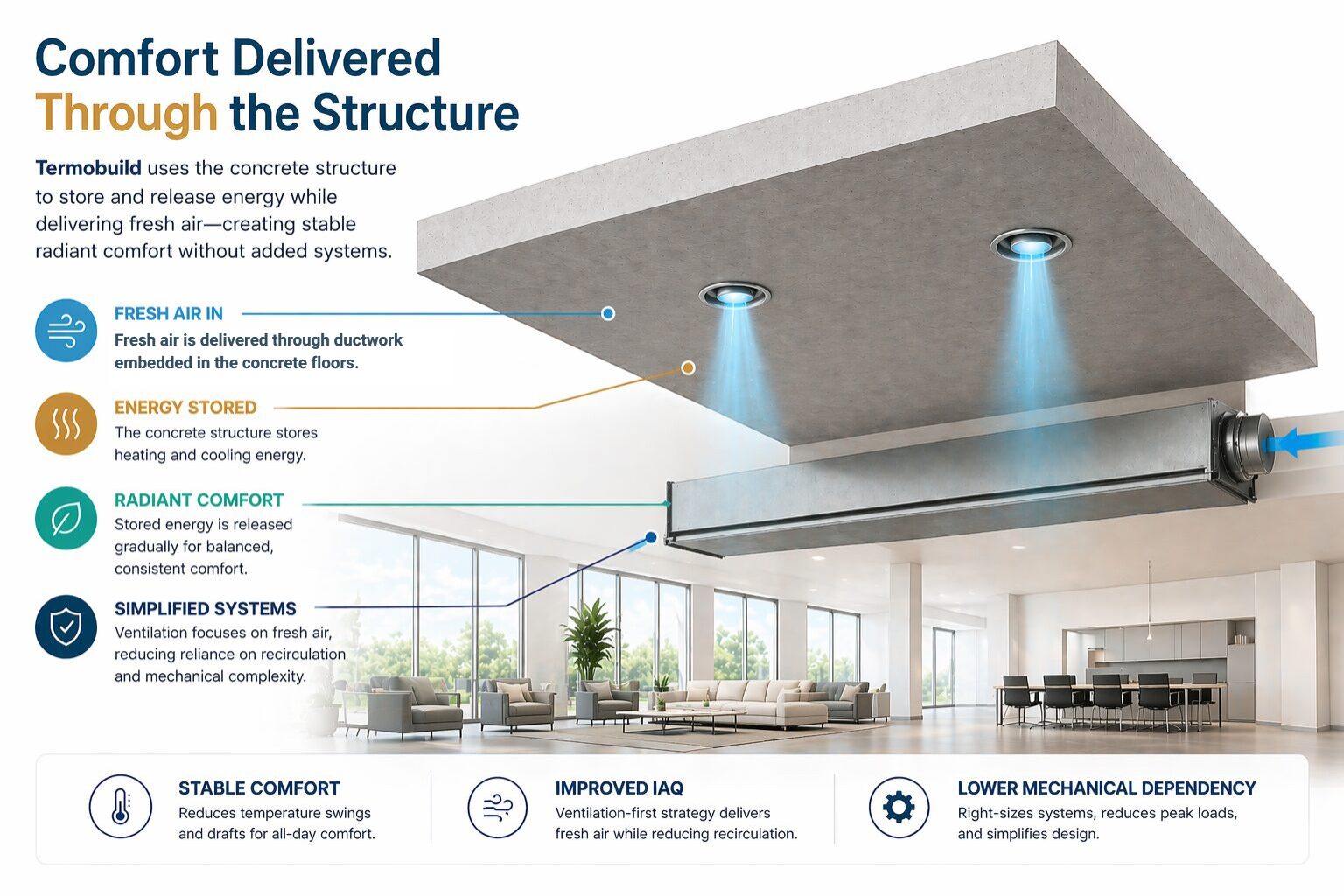
Fresh Air Delivered
Ventilation can focus on supplying fresh outdoor air instead of constantly recirculating indoor air.
Energy Stored in Structure
The concrete mass stores heating and cooling energy, then releases it gradually over time.
Comfort Released Over Time
Stored energy helps stabilize surfaces and reduce the swings that often drive comfort complaints.
Proven Performance — Not Just Design Intent
Termobuild doesn’t just change how buildings are designed. It changes how they perform in real operating conditions.
Stable Comfort vs Constant Cycling
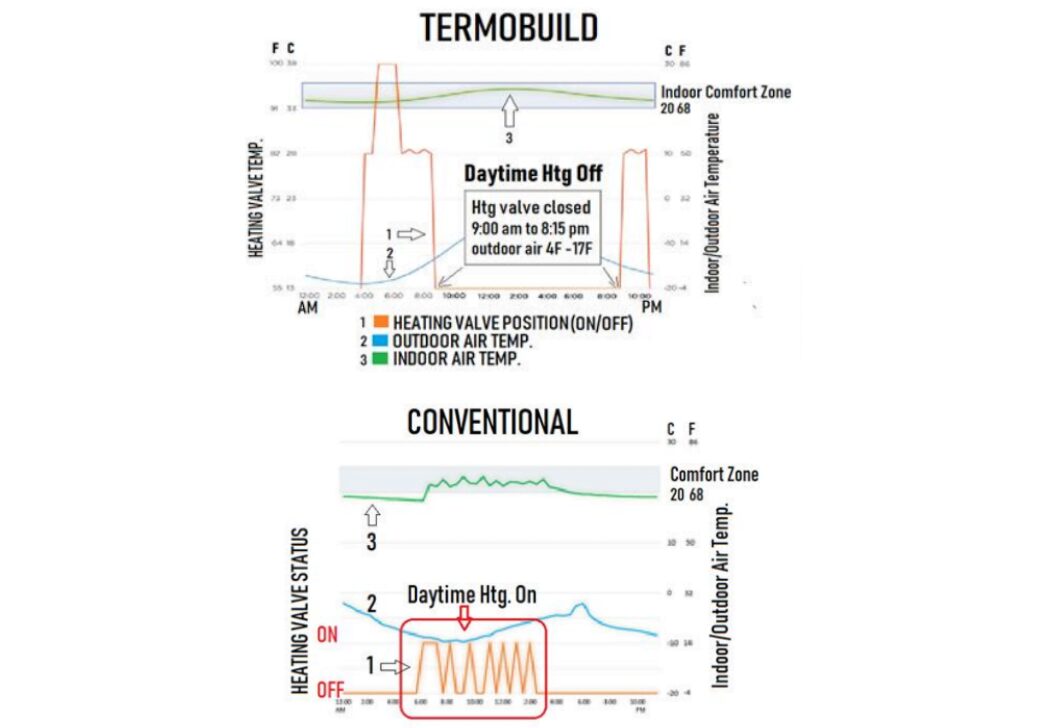
Conventional systems rely on repeated heating or cooling cycles, which can create temperature swings and occupant discomfort. Termobuild smooths those swings by storing and releasing energy gradually through the structure.
Lower CO₂ and Better Air Quality
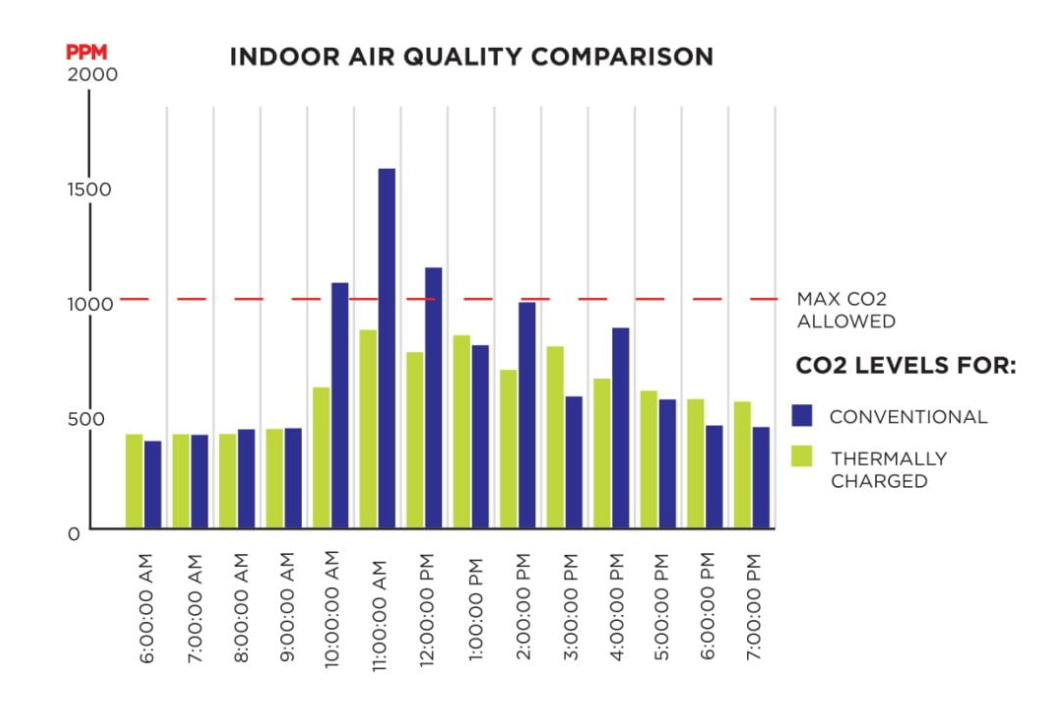
When ventilation is focused on fresh-air delivery rather than recirculation, indoor air quality can remain more stable throughout occupied hours.
Real-World Performance
Termobuild has been applied in large-scale projects where stable comfort, fresh-air ventilation, energy performance, and mechanical simplicity all need to work together.
Comfort and Ventilation in Practice
Completed projects show how structural thermal storage can support more stable indoor conditions while allowing ventilation to focus on fresh-air delivery.
Performance Without Added Complexity
By using the building structure as the thermal storage medium, projects can reduce mechanical dependency while supporting comfort, air quality, and energy goals.
Illustrative outcomes and project-specific results (confirm supporting project documentation)
Why This Changes the Design Equation
Comfort and ventilation directly impact occupant experience, operational performance, long-term operating cost, and building value.
Better Occupant Experience
Stable radiant comfort helps create spaces that feel more balanced, with fewer drafts and fewer hot-cold complaints.
Improved Indoor Air Quality
Fresh-air-focused ventilation supports healthier indoor environments and more consistent indoor air quality.
Lower Mechanical Burden
By letting the structure carry part of the thermal load, projects can reduce dependency on oversized HVAC systems.
Better Comfort Starts With Better Building Questions
Before adding mechanical equipment or a separate radiant system, consider what the building structure could contribute to comfort, ventilation, and long-term costs.
How can we reduce hot and cold spots without adding a separate radiant heating and cooling system?
Comfort depends on both air temperature and the surfaces around occupants. Termobuild uses controlled airflow through integrated concrete pathways to actively store and release thermal energy. That helps stabilize surface temperatures and can reduce temperature swings without requiring a separate hydronic radiant system.
See how the building structure works →Can we improve fresh-air ventilation and indoor comfort without increasing HVAC infrastructure?
In suitable projects, separating much of the comfort load from fresh-air delivery can allow ventilation to focus on outdoor-air supply while the building mass helps stabilize temperatures. Indoor air quality still depends on ventilation rates, filtration, humidity control, and system operation; project-specific engineering determines the mechanical requirements.
Explore the fresh-air building strategy →Can better occupant comfort also improve construction and long-term operating economics?
Potentially. When the structure helps manage heating and cooling loads, project teams can evaluate HVAC right-sizing, peak-demand reduction, and lower operating costs together with comfort. The opportunity depends on the building and should be established through a project-specific comparison rather than assumed.
Explore the financial impact →More Than a Comfort Upgrade
Termobuild is not simply a radiant comfort strategy. It is an integrated building performance approach that can improve comfort, ventilation, energy demand, mechanical simplicity, and long-term value at the same time.
What the Structure Can Do
- Store heating and cooling energy
- Stabilize indoor comfort conditions
- Support radiant comfort without added radiant systems
- Reduce daytime HVAC demand
- Help ventilation focus on fresh-air delivery
What This Can Reduce
- Oversized mechanical dependency
- Recirculation-heavy comfort strategies
- Temperature swings and occupant complaints
- Added radiant system infrastructure
- Complexity from treating comfort, ventilation, and energy as separate problems
See What Radiant Comfort Without Added Systems Could Mean for Your Project
If you are evaluating comfort, indoor air quality, mechanical sizing, capital cost, or long-term building performance, Termobuild can help compare an integrated structural thermal storage approach against a conventional design path.