From Reactive to Rechargeable Buildings
Transform conventional cast-in-place or hollow-core concrete floors and ceilings into active thermal infrastructure that stores energy, delivers stable radiant comfort, and reduces mechanical demand. No change to the structural system – just a smarter use of the structure you’ve already paid for.
Why This Changes the Conversation
Conventional building systems are typically evaluated around peak demand conditions.
Structural thermal energy storage introduces a different approach – allowing the building itself to participate in comfort delivery, energy management, and infrastructure planning.
For owners, developers, and project teams, this creates opportunities to evaluate capital costs, operating performance, and long-term resilience before mechanical systems are finalized. Explore the ownership perspective.
What Changes in the Design
Activate the Structure You’ve Already Paid For
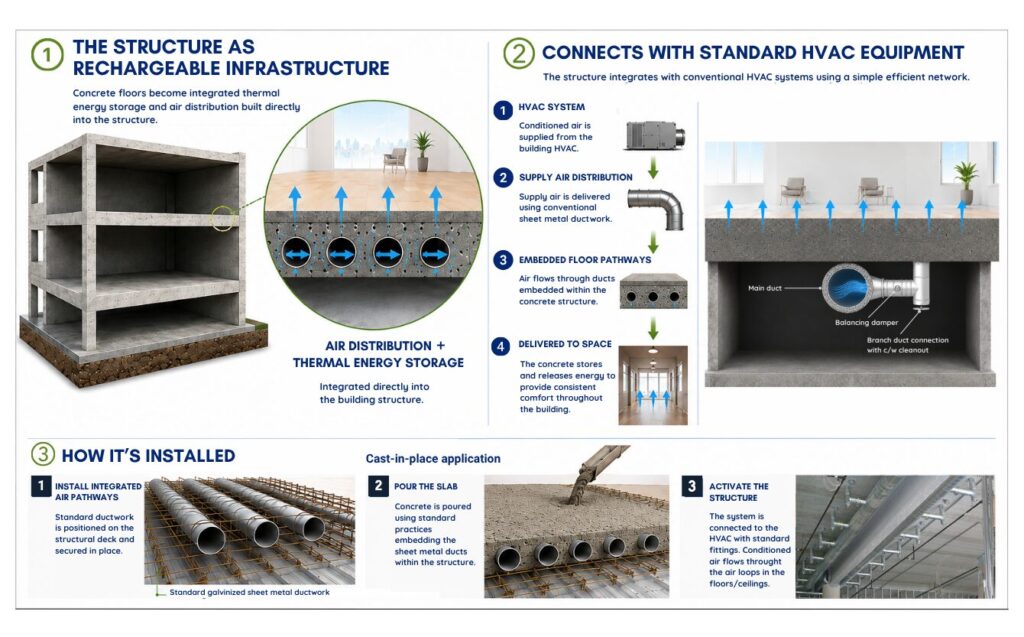
Instead of adding dedicated thermal storage equipment, conventional concrete floors and ceilings become active thermal infrastructure integrated with the HVAC system.
The structure stores energy, supports comfort, and helps reduce mechanical system requirements without changing standard construction methods.
✓ Reduce HVAC capacity requirements
✓ Shift thermal loads away from peak periods
✓ Support fresh-air ventilation strategies
✓ Simplify mechanical infrastructure
✓ Improve long-term building performance
Conventional HVAC ductwork is integrated with cast-in-place or precast concrete systems, improving mechanical system performance by allowing the structure to participate in heating and cooling.
During charging, conditioned air passes through embedded ductwork where thermal energy is absorbed by the concrete. When building loads increase, that stored energy is naturally released back into the occupied space, reducing reliance on mechanical systems throughout the day.
Built using standard construction methods

No added trades or system complexity.
Owner Outcomes
Capital cost impact depends on project type - ranging from cost-neutral to measurable reductions in larger buildings.
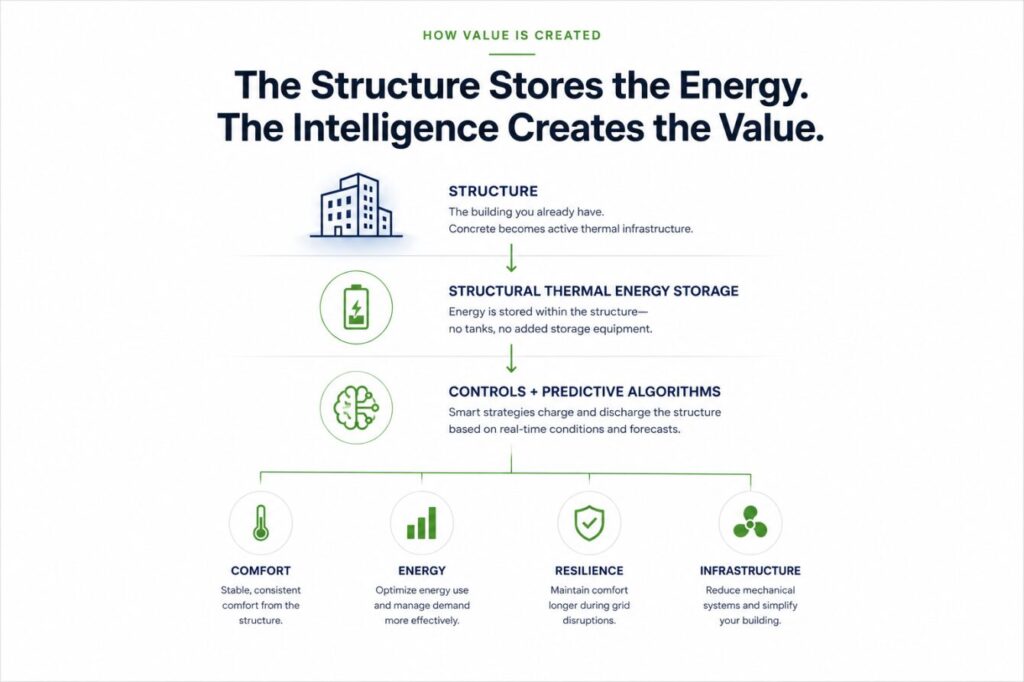
Conventional HVAC systems constantly react to changing loads - creating inefficiencies and comfort variability.
Termobuild makes the structure proactive.
Energy is stored in the structure - not chased by HVAC - delivering stable, resilient comfort throughout the day.
Termobuild integrates into standard construction and mechanical systems.
No changes to your specification standards.
Thermal mass is passive. Termobuild actively manages thermal energy in the structure. Learn the difference →
Projects & Applications
We review your building design to identify:
HVAC capital cost reductions
peak demand reduction opportunities
long-term operating savings
The Cost Isn't Evaluating Termobuild
The real cost may be designing a building without understanding whether its structure could reduce mechanical infrastructure, improve project economics, and lower operating costs for decades.
That's why every engagement begins with a Project Evaluation - not an equipment proposal.
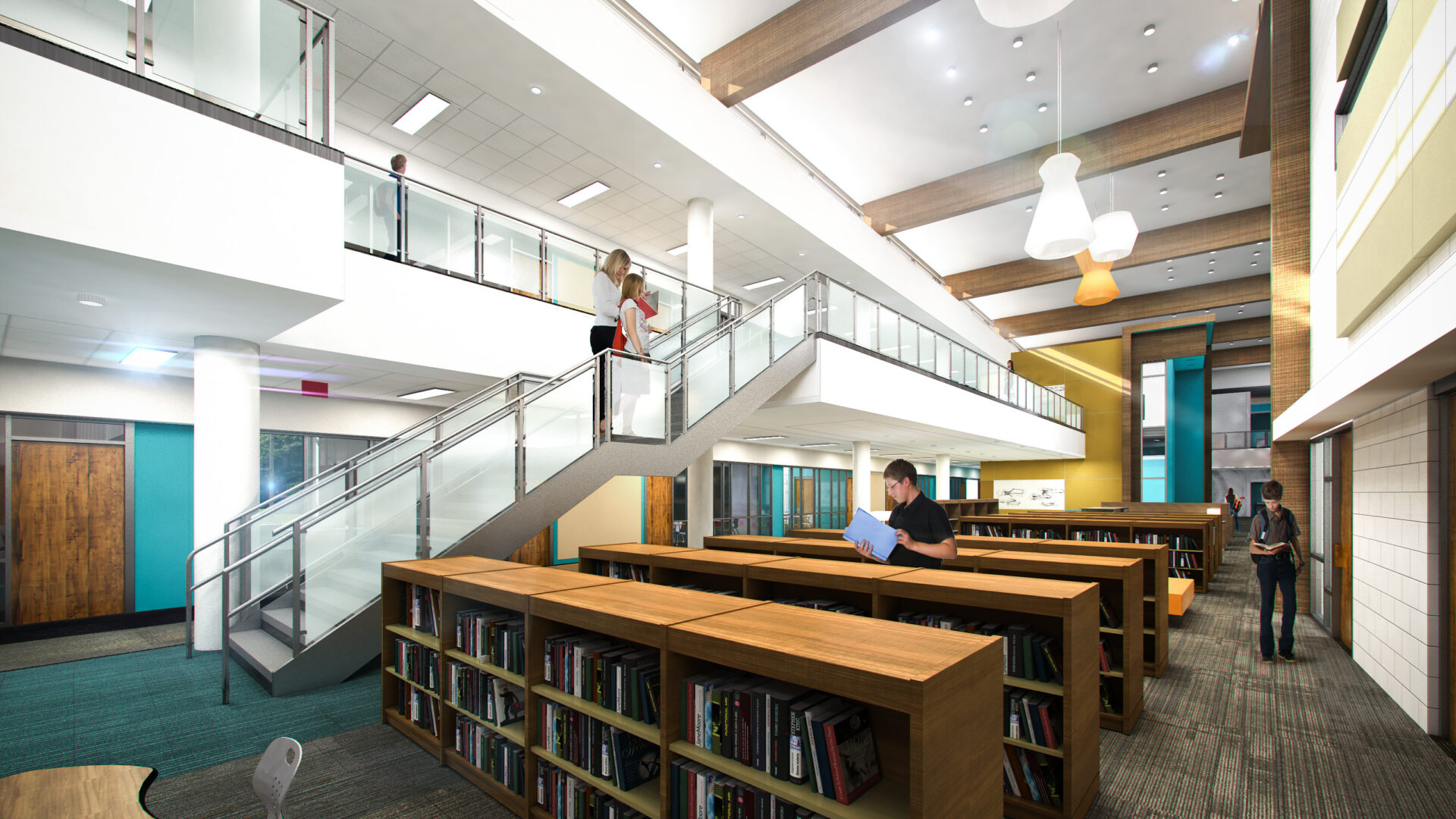
Completed High-Performance Institutional Project