Thermal Storage Without Dedicated Tanks
Traditional thermal storage often requires separate tanks, ice systems, or centralized mechanical infrastructure. Termobuild approaches storage differently by activating the building structure itself.
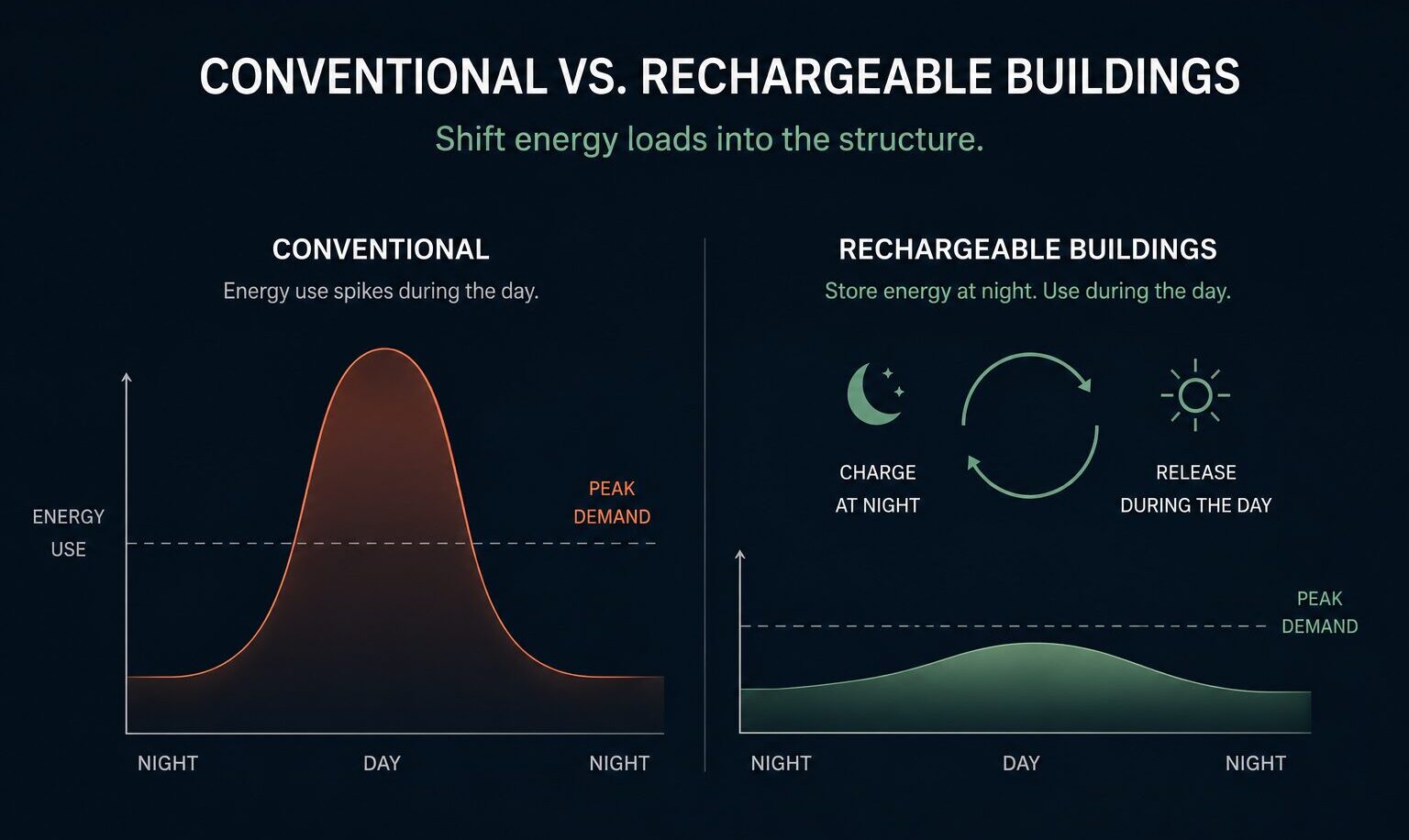
Thermal storage is becoming more important. The infrastructure required to deliver it does not have to stay the same.
Large buildings face increasing pressure to reduce peak demand, manage energy timing, improve comfort, and support more resilient operation. For many projects, thermal storage is a logical strategy.
The question is no longer whether buildings should manage heating and cooling more intelligently. The question is how much additional infrastructure should be required to do it.
Many storage systems depend on dedicated equipment outside the structure itself.
Centralized storage infrastructure
Traditional systems often store heating or cooling capacity in dedicated tanks, ice storage equipment, or centralized plant infrastructure.
- Additional storage equipment
- Mechanical room or plant space requirements
- Controls integration
- Ongoing maintenance and lifecycle considerations
A useful strategy, but not the only path
These systems have helped many projects shift loads and manage energy demand. Termobuild builds on the same thermal storage logic, but integrates storage into the building structure itself.
- Same objective: shift and stabilize thermal loads
- Different medium: the structure itself
- Reduced dependence on separate storage infrastructure
- Designed for large concrete buildings
The building structure becomes the storage system.
Termobuild uses concrete floor and ceiling systems as distributed thermal storage. Instead of adding a separate storage vessel, the system activates structural mass already required for the building.
Heating or cooling is stored in the structure and released over time, helping reduce peak loads, stabilize indoor conditions, and support radiant comfort with less mechanical infrastructure.
Distributed storage
Thermal capacity is spread throughout the building structure rather than concentrated in one mechanical storage asset.
Integrated by design
The structure is already part of the project. Termobuild helps it do more without adding tanks or ice storage equipment.
Two ways to think about thermal storage.
Dedicated Thermal Storage
Structural Thermal Storage
Not less storage. Less separate storage infrastructure.
Termobuild does not argue that thermal storage is unnecessary. It argues that in many large concrete buildings, the structure itself can become a meaningful part of the thermal storage strategy.
Dedicated storage equipment can create long-term ownership considerations.
For many owners and capital project teams, this changes how building infrastructure can be evaluated before conventional mechanical scope is finalized. Explore the ownership perspective.
Large thermal storage systems may involve specialized equipment, controls, maintenance, operational oversight, and future replacement planning. Even when the strategy is sound, the infrastructure burden can be significant.
Structural thermal storage reduces reliance on separate storage assets by embedding thermal capacity into the building’s long-life structural system.
Fewer dedicated components
By using structural mass as the storage medium, projects may reduce the amount of separate storage equipment required.
Long-life infrastructure
Concrete structure is already a durable building asset. Termobuild helps convert that asset into active thermal infrastructure.
Designed for large buildings where structure, comfort, and energy timing matter.
Termobuild is especially relevant where concrete structure, high occupancy, peak demand, ventilation, and long-term operational costs all influence project value.
Thermal storage does not have to be something added beside the building.
In a Termobuild project, storage is not a separate tank, ice system, or mechanical add-on. It is integrated into the concrete structure itself, helping the building absorb, store, and release heating or cooling throughout the day.
Charge when conditions are favorable
The structure can be conditioned when energy timing, outdoor conditions, or system operation are more favorable.
Release over time
Stored heating or cooling is released gradually, helping maintain stable indoor conditions with reduced mechanical intensity.
Before adding thermal storage equipment, evaluate what the structure can already do.
Termobuild helps project teams identify where structural thermal energy storage may reduce mechanical infrastructure, lower peak demand, and improve long-term building performance.
See How This Applies