Better Building Performance Starts With Load Strategy
Termobuild helps project teams improve comfort, ventilation, energy stability, and long-term operating performance by activating structural mass already built into the project.

Most building performance problems are addressed after the load is already created.
Conventional design often improves performance by adding capacity, controls, mechanical layers, or separate storage equipment. Those strategies can help, but they may also increase coordination, cost, maintenance, and long-term ownership complexity.
Termobuild changes the starting point. Instead of asking how much equipment is needed to react to load, the design team can ask how much thermal load the structure itself can absorb, store, and release over time.
When the structure participates, the building strategy changes.
Less reactive operation
Instead of constantly chasing indoor load changes, the building can smooth heating and cooling demand through the thermal capacity of its concrete structure.
- Reduced daytime peaks
- More stable indoor conditions
- Lower mechanical intensity
- Better use of energy timing
Better building outcomes
Structural thermal energy storage supports comfort, fresh air, efficiency, resilience, and financial alignment as one integrated performance strategy.
- Radiant comfort
- Ventilation-forward design
- Lower operating burden
- Long-term infrastructure value
High performance does not have to mean more systems.
Many high-performance buildings reach their goals by layering additional equipment onto the project. Termobuild creates value differently: by helping the structure carry part of the thermal load itself.
This can reduce mechanical dependency, improve comfort stability, and support energy efficiency without relying on dedicated thermal storage tanks, ice systems, or short-life storage assets.
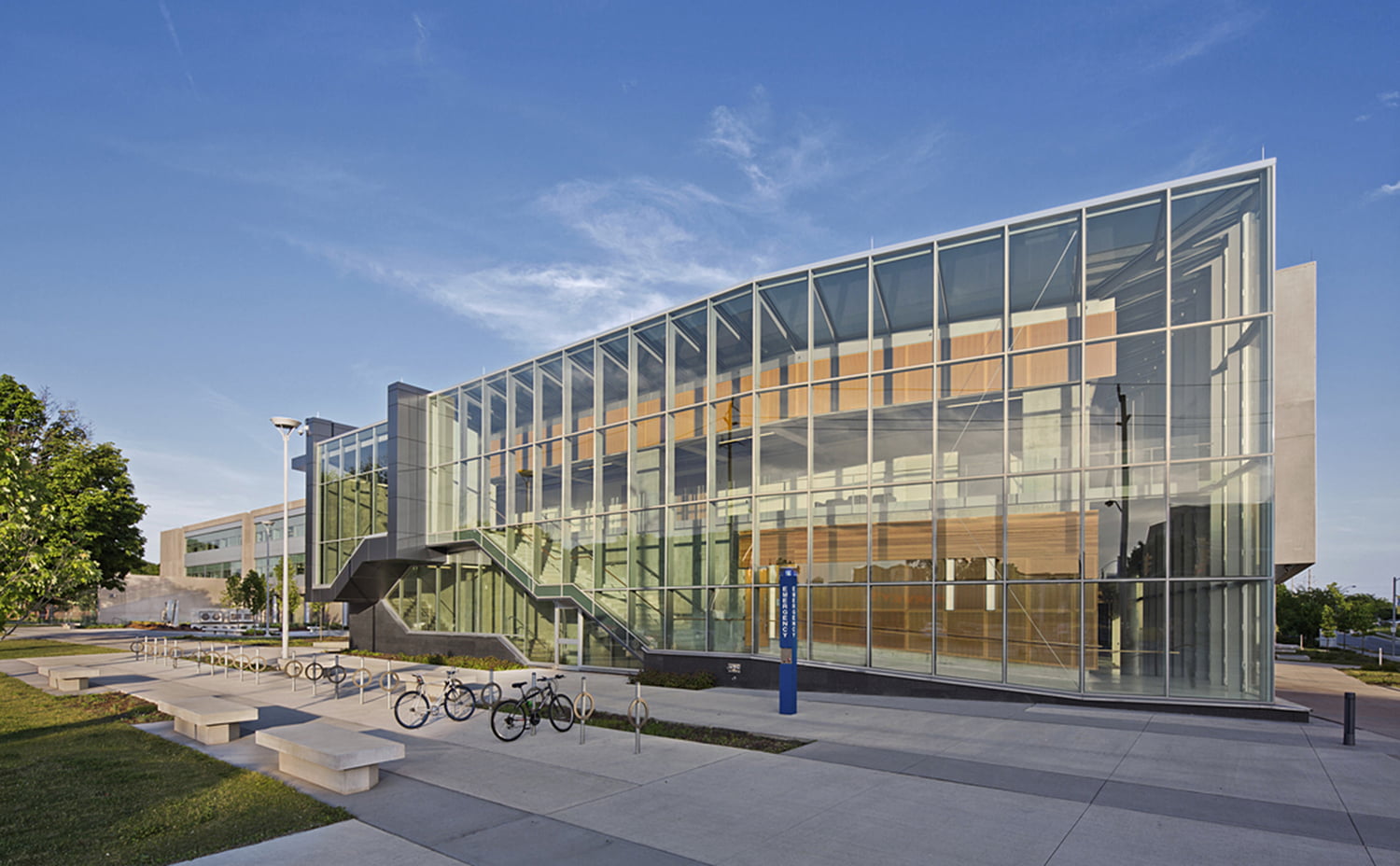
Plan the load before oversizing the response.
When structural thermal energy storage is considered early, it can influence mechanical scope, peak demand, operating costs, and long-term building performance.
The structure becomes part of the comfort and energy system.
Termobuild uses concrete floor and ceiling systems as distributed thermal storage. Air is routed through the structure, allowing concrete mass to absorb, store, and release heating or cooling over time.
The result is not a separate storage system placed beside the building. It is thermal performance integrated into structural mass the project already requires.
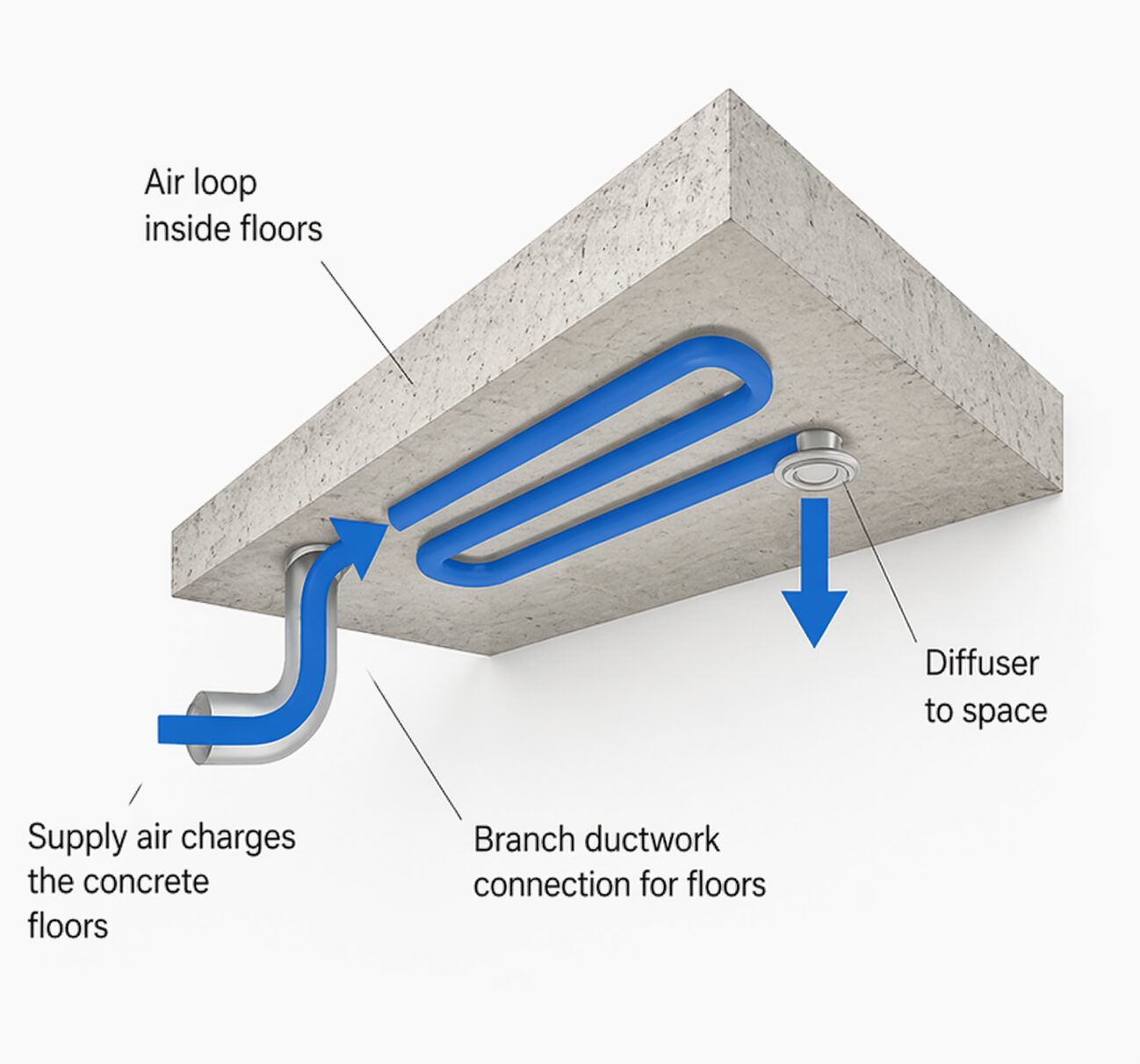
The structure already exists. The question is whether it participates.
Termobuild is not about adding another layer of infrastructure. It is about making the building's long-life structural mass part of the performance strategy from the beginning.
Better performance should be felt by the people inside the building.
Energy strategy matters, but building performance is not only about utility bills. It is also about stable temperatures, quieter spaces, fresh air, and fewer comfort swings throughout the day.
By storing and releasing heating or cooling through the structure, Termobuild helps buildings deliver more consistent indoor conditions with reduced reliance on reactive mechanical operation.
Stable radiant comfort
Thermal energy is distributed through the building structure, helping spaces feel more stable and less dependent on constant air-based correction.
Fresh-air potential
Because the structure helps carry thermal load, ventilation can be supported without relying entirely on larger reactive mechanical systems.
Structural performance does not come with the same replacement cycle as added storage equipment.
Many energy strategies depend on equipment with maintenance, replacement, and lifecycle planning requirements. Termobuild uses the building's concrete structure as the storage medium, reducing dependence on separate thermal storage assets.
Concrete structure is already part of the project's long-life infrastructure. When activated as thermal storage, it becomes a durable performance asset rather than another short-life system layer.
Added Performance Layers
Structural Performance
Relevant wherever comfort, energy timing, ventilation, and long-term operating costs all matter.
Termobuild is especially relevant for large concrete buildings where mechanical scope, peak demand, occupancy comfort, and infrastructure longevity are central to project value.
The greatest value comes when building performance is planned early.
Structural thermal energy storage is most powerful when considered before mechanical systems are fully sized and performance assumptions are locked in.
Early evaluation helps project teams understand where the structure can reduce peak load, simplify infrastructure, improve comfort, and strengthen the financial case for high-performance design.
For many owners and capital project teams, this changes how building infrastructure can be evaluated before conventional mechanical scope is finalized. Explore the ownership perspective.

A better starting question
Before asking what systems need to be added, ask what the building structure can already do.
- Can peak loads be reduced?
- Can comfort be stabilized?
- Can ventilation be supported more efficiently?
- Can long-term ownership complexity be reduced?
Before adding more systems, evaluate what the structure can already do.
Termobuild helps project teams identify where structural thermal energy storage can improve comfort, reduce peak demand, lower operating costs, and simplify long-term building performance.
See How This Applies