Rechargeable buildings create different ownership outcomes.
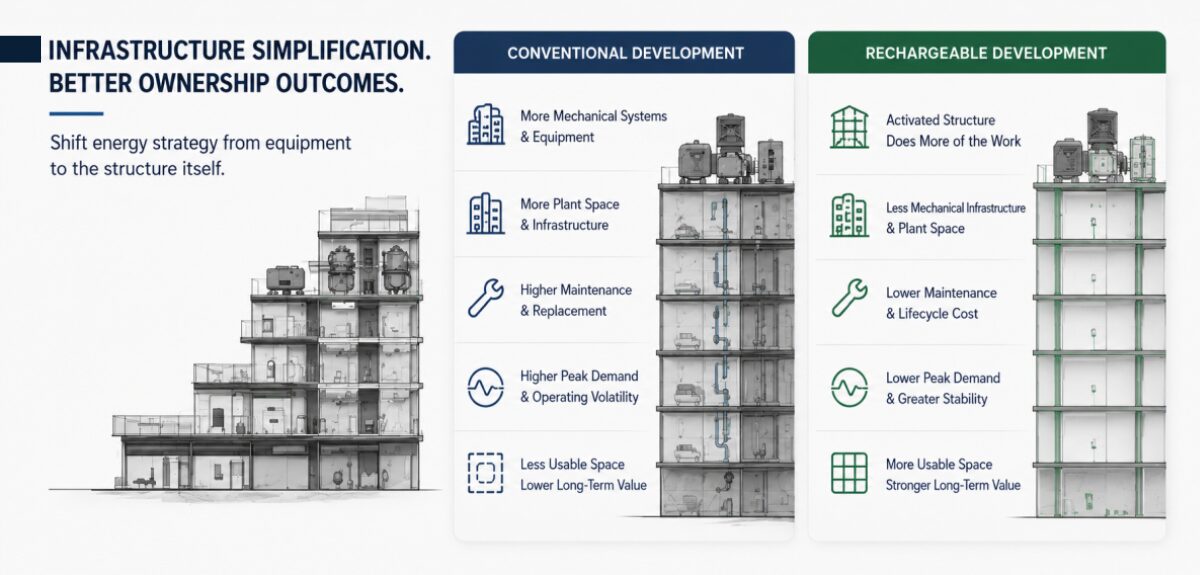
Most developments still rely on increasingly layered mechanical infrastructure to react to thermal loads after they occur. Termobuild approaches building performance differently by allowing the structure itself to participate in heating, cooling, ventilation, and energy stability over time.
The result is not only lower energy intensity — it may also reduce infrastructure dependence, improve long-term operating predictability, strengthen occupant experience, and create more resilient real estate assets.
High-performance buildings do not always require more infrastructure.
Conventional projects often pursue performance through larger mechanical systems, dedicated thermal storage, added controls, oversized equipment, and layered infrastructure coordination.
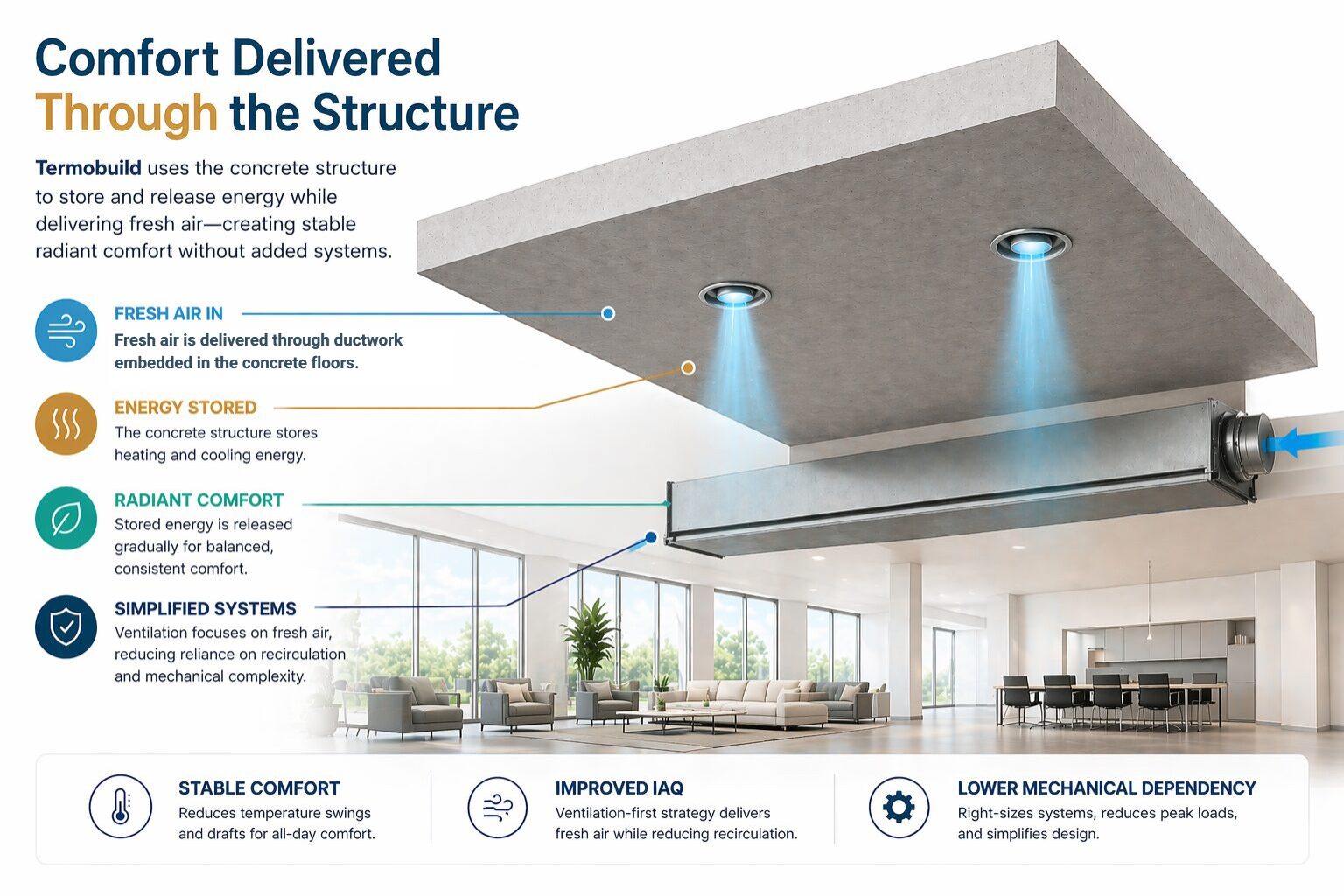
Termobuild shifts part of that energy strategy into the concrete structure itself — allowing the building to absorb, store, and release energy over time while reducing reliance on additional systems.
This changes the relationship between structure, energy demand, operating stability, and long-term ownership economics.
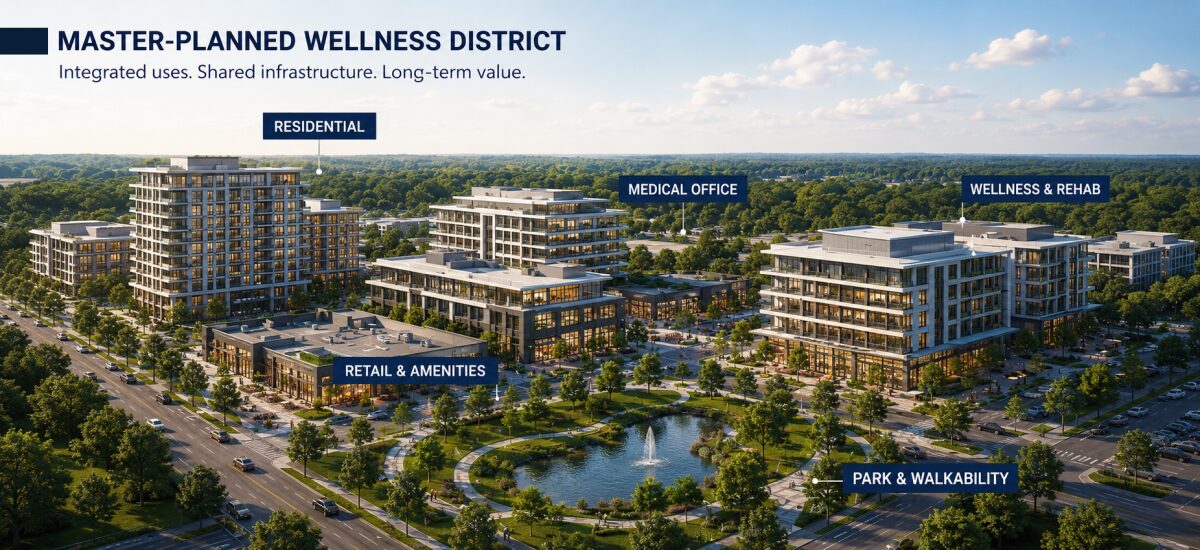
Embedded infrastructure becomes more powerful at district scale.
Termobuild is not limited to individual buildings. Structural thermal energy storage can support broader development strategies across residential, healthcare, wellness, mixed-use, and institutional environments.
As developments scale, reducing infrastructure intensity and operational volatility across multiple assets may create meaningful long-term ownership advantages.
Buildings that stabilize thermal performance may create lower-volatility ownership outcomes.
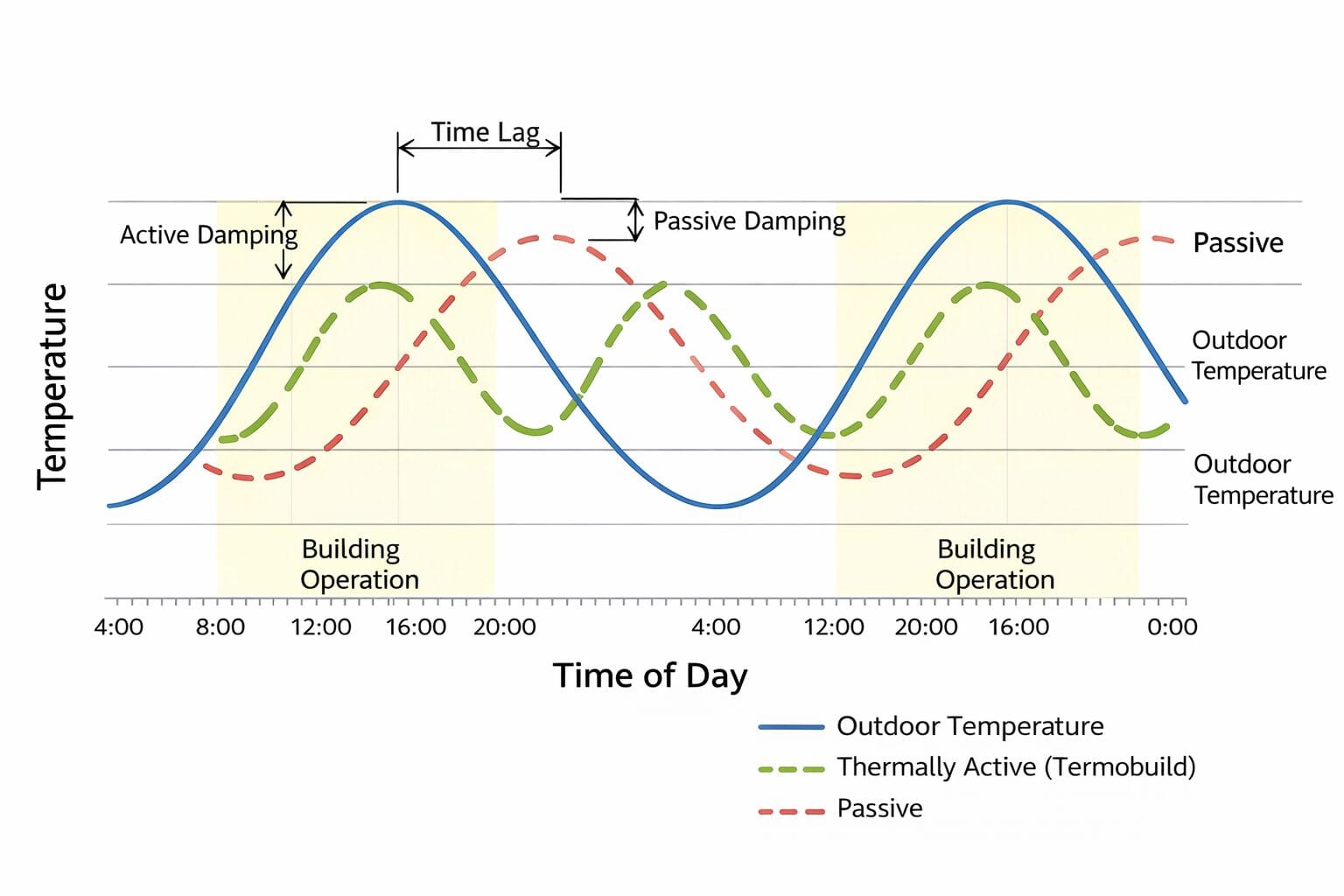
Most buildings continuously react to changing thermal loads in real time. This can increase peak demand, operational variability, maintenance exposure, and infrastructure stress.
Rechargeable buildings behave differently by storing and releasing energy gradually through the structure itself.
Lower HVAC intensity may reduce oversized mechanical infrastructure requirements.
Gradual energy release can reduce swings, drafts, and operational instability.
Buildings may rely less heavily on added thermal infrastructure and system layering.
Reduced infrastructure dependency may improve resilience and ownership predictability.
Stable radiant comfort may create better long-term occupant outcomes.
Most buildings passively react to changing thermal loads after they occur. Rechargeable buildings behave differently by allowing the structure itself to absorb, store, and release energy gradually over time.
This can help stabilize indoor conditions throughout the day while supporting ventilation-first strategies, reducing mechanical dependence, and improving long-term operational consistency.
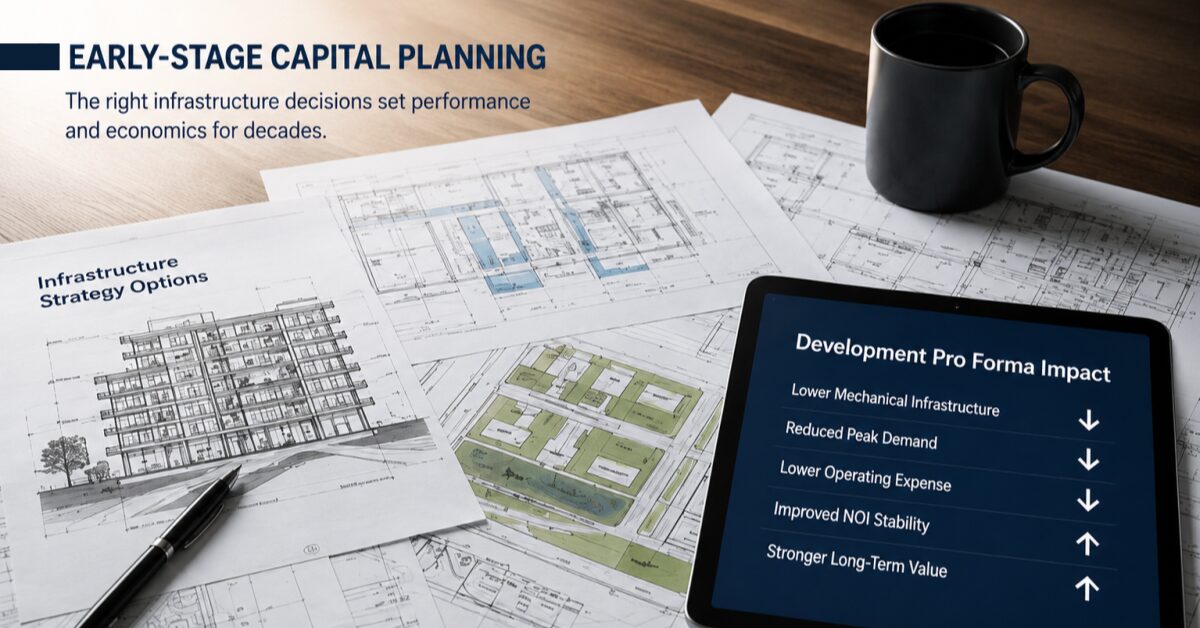
Many long-term ownership outcomes are decided before systems are locked in.
The relationship between structure, HVAC strategy, ventilation, and energy storage can significantly influence project economics for decades.
Evaluating embedded infrastructure strategies early may help teams reduce unnecessary mechanical complexity before oversized systems and added infrastructure layers become embedded into the project.
This is not only an energy conversation. It is a capital planning, infrastructure strategy, and long-term operational performance conversation.
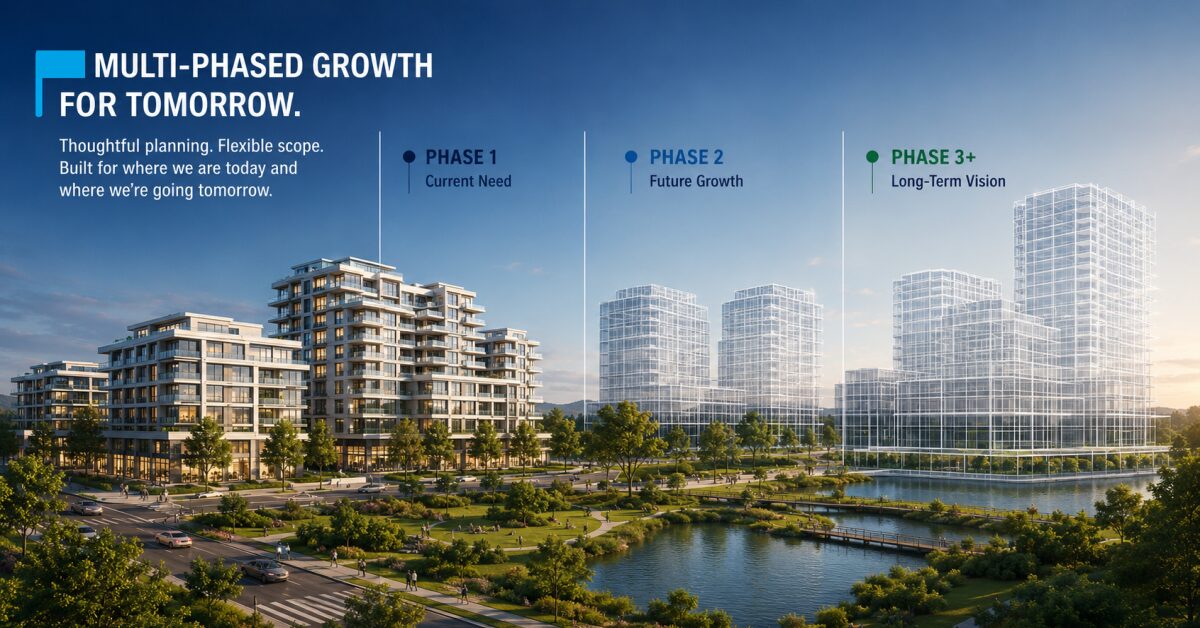
Rechargeable developments can support phased growth and long-term infrastructure flexibility.
As communities evolve, buildings that reduce infrastructure dependency may create more adaptable long-term development ecosystems.
Better buildings are not only measured by efficiency — but by how people experience them.
Stable radiant comfort, reduced temperature swings, improved fresh-air strategies, quieter operation, and simplified infrastructure can influence how occupants experience residential, healthcare, wellness, and mixed-use environments.
In many asset classes, comfort and operational consistency may contribute to stronger tenant satisfaction, healthcare outcomes, retention, and long-term property value.
The future of high-performance real estate may not be defined by how many systems a building adds — but by how intelligently the structure itself participates in comfort, energy stability, and long-term operational performance.
Understand how rechargeable building strategies may influence project economics before infrastructure decisions are finalized.
Termobuild works with project teams evaluating long-term building performance, infrastructure intensity, mechanical burden, energy strategy, occupant comfort, and ownership economics.
Images and development scenarios shown are conceptual illustrations intended to demonstrate potential infrastructure, performance, and ownership strategies.