Better Buildings Make Better HVAC Systems
Modern HVAC systems can perform extremely well. The challenge is what they are asked to carry. In conventional buildings, mechanical systems are expected to manage heating, cooling, ventilation, peak demand, solar gains, occupancy swings, and comfort almost entirely through equipment.
Termobuild changes that equation by enabling the structure itself to share thermal loads with the mechanical system. The result is a simpler, more efficient building where HVAC systems operate under more stable conditions, with less equipment, lower operating costs, and better outcomes.
Stop Asking HVAC to Carry the Entire Building
HVAC systems are essential. But in most buildings, they are forced to solve nearly every comfort and load problem after it occurs. That creates larger equipment, more ductwork, higher energy demand, greater coordination, and more mechanical infrastructure to operate and maintain.
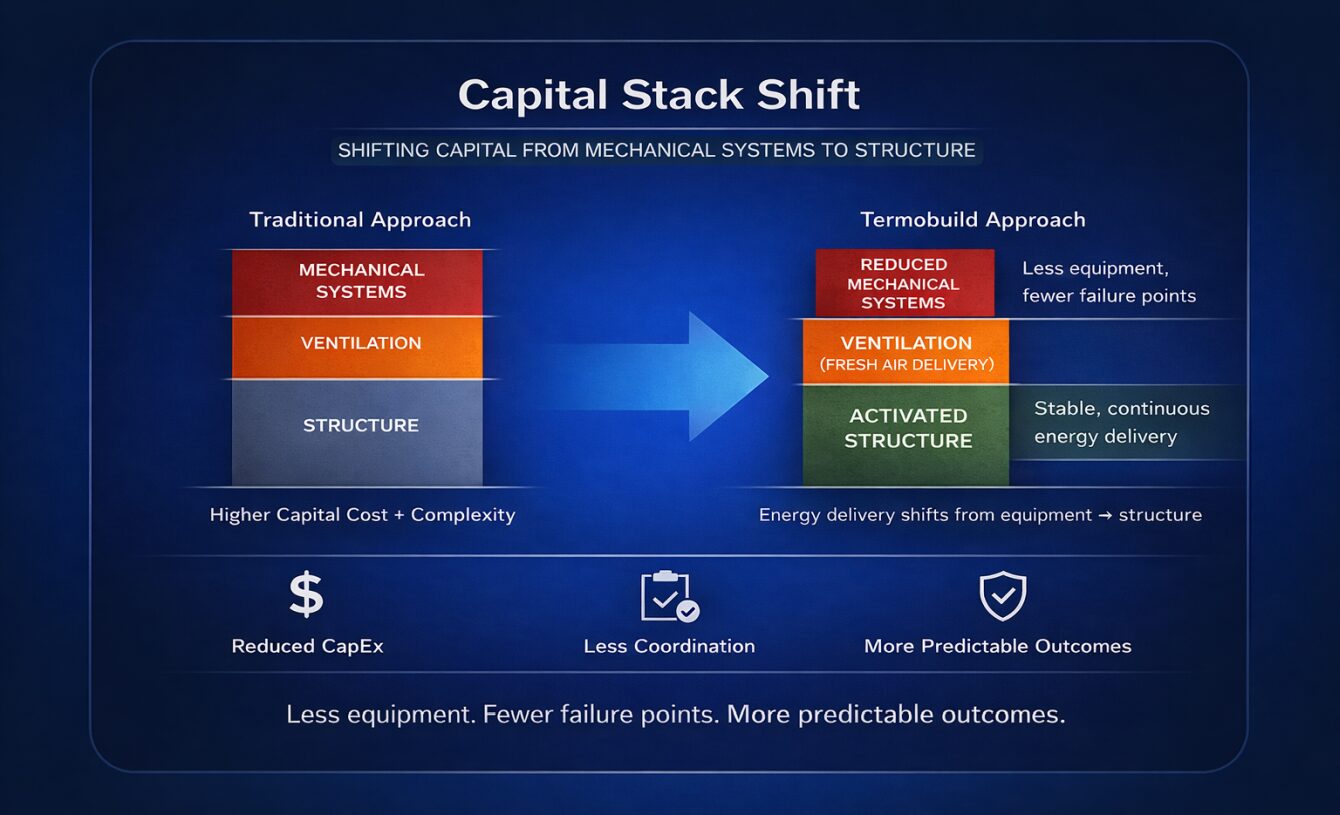
Termobuild allows the structure to become active thermal infrastructure. Instead of relying only on mechanical equipment to respond to load changes, the building itself absorbs, stores, and releases thermal energy.
The goal is not to replace HVAC. The goal is to make the HVAC system's job easier.
The Building Becomes Part of the Mechanical Strategy
Termobuild creates a collaborative relationship between structure and HVAC. The structure manages thermal loads and dampens peaks. The HVAC system delivers heating, cooling, and fresh air under more stable conditions.
Lower Peak Loads
Reduce daytime heating and cooling demand before mechanical systems have to respond.
Reduced Capacity
Lower required HVAC capacity by shifting part of the thermal work into the structure.
Less Runtime
Mechanical systems operate less aggressively, with fewer peaks and less cycling.
Lower Capital Cost
Less mechanical equipment, ductwork, plant space, and coordination can reduce upfront cost.
Lower Maintenance
Fewer components and lower system stress reduce the long-term maintenance burden.
Stable Comfort
Radiant surfaces help maintain consistent indoor conditions throughout the day.
The most efficient mechanical system is not just the one with the highest rating. It is the one asked to do less unnecessary work.
Two Building Strategies. Two Different Cost Profiles.
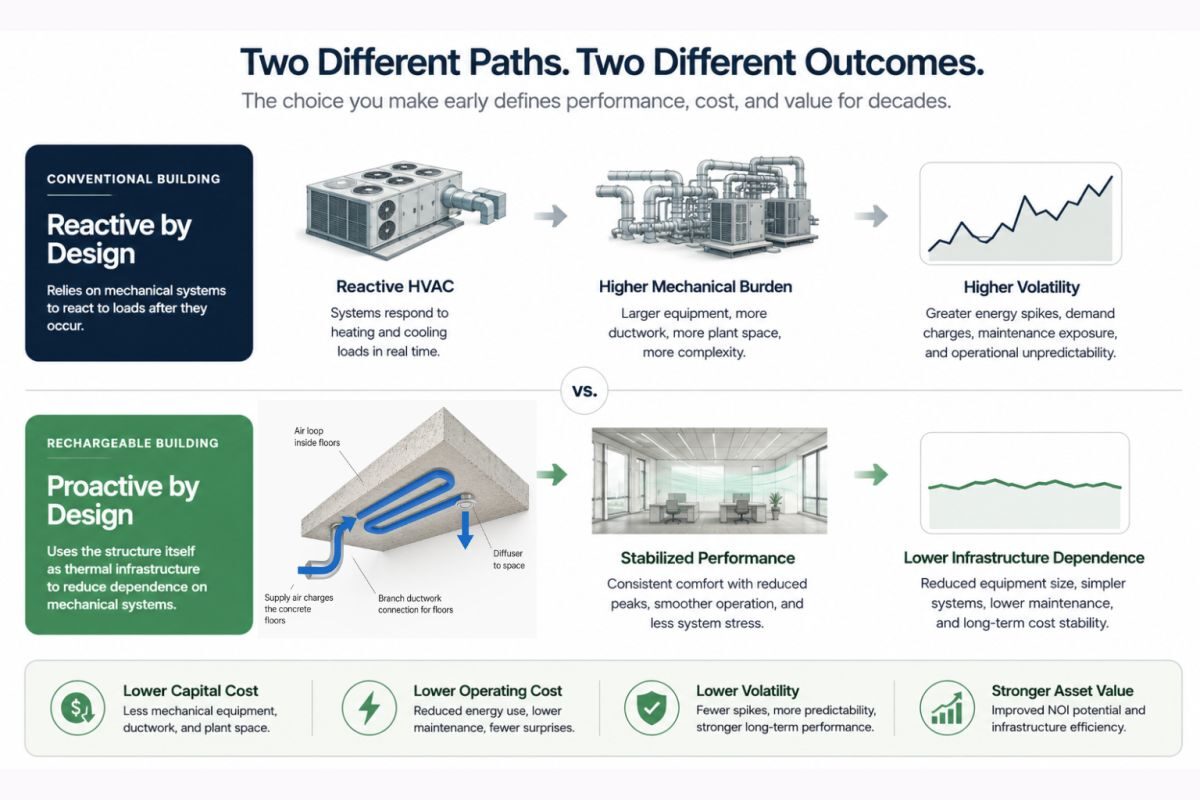
Conventional buildings rely heavily on mechanical systems to react to load changes in real time. Rechargeable buildings use the structure itself to reduce volatility, stabilize comfort, and lessen dependence on mechanical infrastructure.
When HVAC Is Not Chasing Temperature, It Can Support Better Ventilation
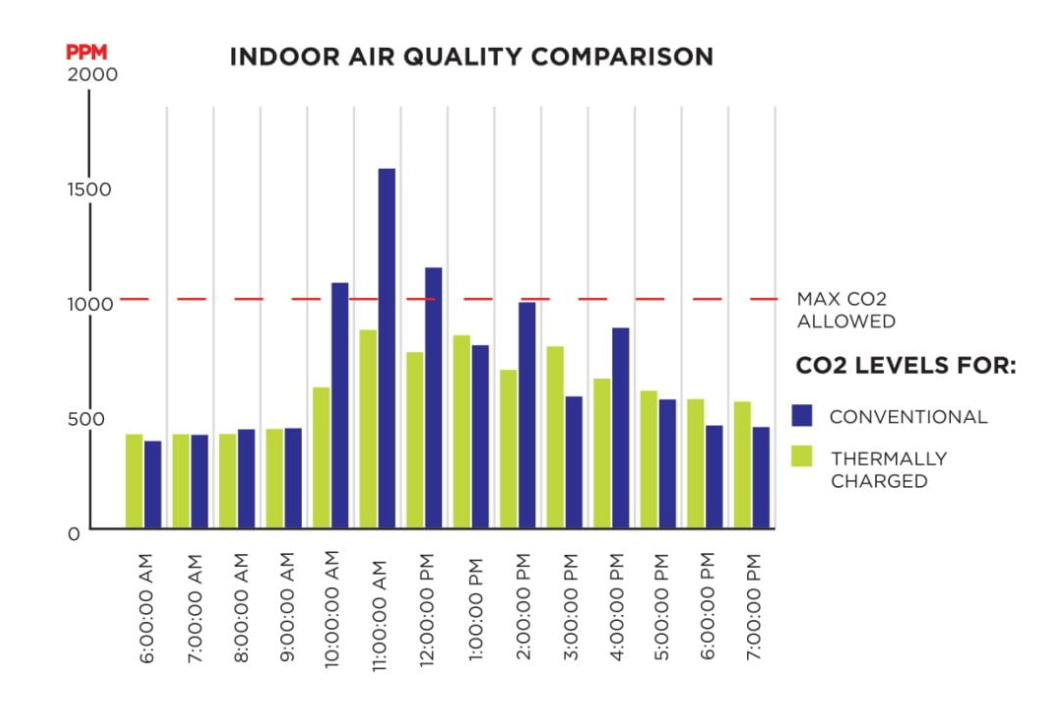
Fresh air is often treated as an added mechanical burden because ventilation has to be conditioned. When the structure helps stabilize thermal loads, HVAC systems have greater capacity to support fresh-air delivery without adding unnecessary cost and complexity.
Termobuild's approach helps create buildings that can deliver stable radiant comfort and improved indoor air quality by reducing the load that would otherwise be placed entirely on the HVAC system.
Less Mechanical Infrastructure to Own, Operate, and Maintain
HVAC cost is not only an equipment purchase. It is a long-term ownership commitment. Larger systems bring more components, more maintenance, more replacement exposure, more energy use, and more operational risk.
| Conventional Building | Termobuild Structural Load Sharing |
|---|---|
| Larger mechanical systems Equipment must manage nearly all thermal loads. | Reduced mechanical infrastructure The structure shares part of the thermal work. |
| Higher capital investment More equipment, ductwork, plant space, and coordination. | Lower capital burden Reduced equipment requirements and simplified systems. |
| Greater runtime Systems react to changing loads throughout the day. | Less aggressive operation Stable structure reduces peaks and demand swings. |
| More maintenance exposure More components, valves, pumps, and failure points. | Fewer failure points Less mechanical complexity to maintain over time. |
| Comfort volatility Systems correct conditions after they drift. | Stable radiant comfort The building helps maintain consistent conditions. |
| Ventilation competes with load control Fresh air can increase heating and cooling burden. | Greater fresh-air potential Reduced thermal burden helps HVAC support ventilation. |
Real Buildings Show What Happens When HVAC Carries Less Load
When the structure shares thermal loads with the mechanical system, indoor conditions become more stable and equipment can operate less often while still maintaining comfort.
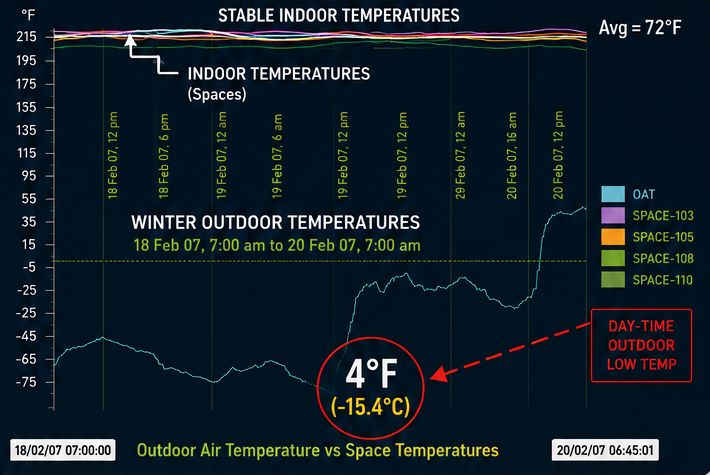
Stable Indoor Temperatures During Extreme Outdoor Conditions
Outdoor temperatures dropped to 4°F while indoor temperatures remained approximately 72°F across measured spaces. The building helped absorb and release thermal energy, reducing the burden placed on HVAC during extreme outdoor conditions.
- Stable radiant comfort
- Reduced HVAC burden
- Measured in an occupied building
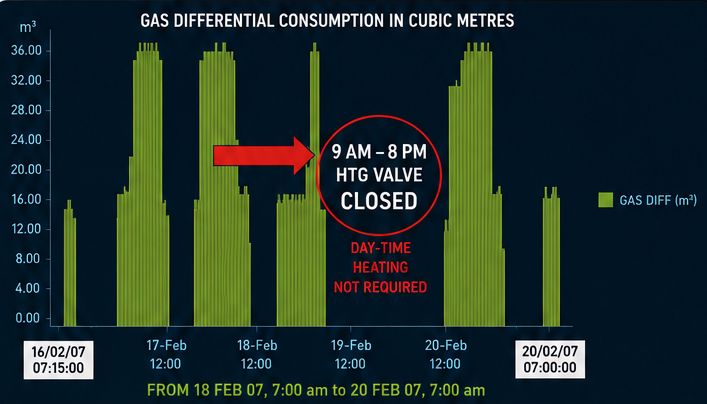
HVAC Does Not Have to Work as Hard When the Structure Shares the Load
In this measured period, the heating valve remained closed from 9 AM to 8 PM while the building maintained comfortable indoor conditions.
Operating cost is not only about equipment efficiency. It is also about how often the equipment needs to run, how aggressively it responds, and how much stress the system experiences over time.
- Lower equipment runtime
- Less mechanical stress
- Lower operating cost potential
Compatible with the Mechanical Systems Engineers Already Specify
Termobuild is not a separate thermal storage tank, battery, or added mechanical plant. It is a structural thermal energy storage strategy that integrates with the building and works alongside familiar mechanical approaches.
Termobuild does not compete with HVAC. It gives HVAC a better building to work with.
Great HVAC Systems Perform Even Better When the Building Shares the Load.
Mechanical systems remain essential. But they should not be forced to carry the entire burden of comfort, ventilation, peak demand, and long-term performance alone.
By activating the structure as thermal infrastructure, Termobuild reduces mechanical load, lowers cost and complexity, supports fresh-air delivery, improves radiant comfort, and creates more predictable building performance.