What if buildings helped expand grid capacity?
Termobuild transforms floors and ceilings into active thermal infrastructure that stores energy, reduces peak demand, and creates new capacity across campuses, communities, and energy-constrained developments.
It starts with the structure already in the project.
Instead of adding dedicated storage systems, Termobuild activates the concrete already being built into the project.
- Charge the structure during off-peak periods or favorable outdoor conditions.
- Store thermal energy inside the building’s structure.
- Deliver stable radiant comfort and fresh-air ventilation.
- Reduce peak demand at the building level.
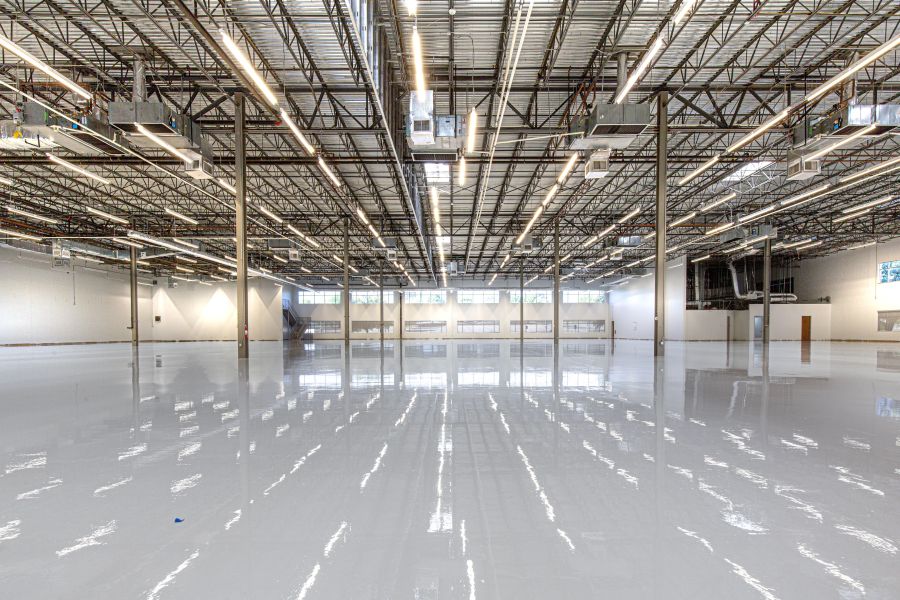
The Opportunity Expands Beyond a Single Building.
A single building creates value. Connected buildings create infrastructure.
Building
The structure stores thermal energy and reduces peak load.
Campus
Different schedules create load diversity and energy-sharing opportunities.
Community
Peak reduction can expand effective capacity from existing infrastructure.
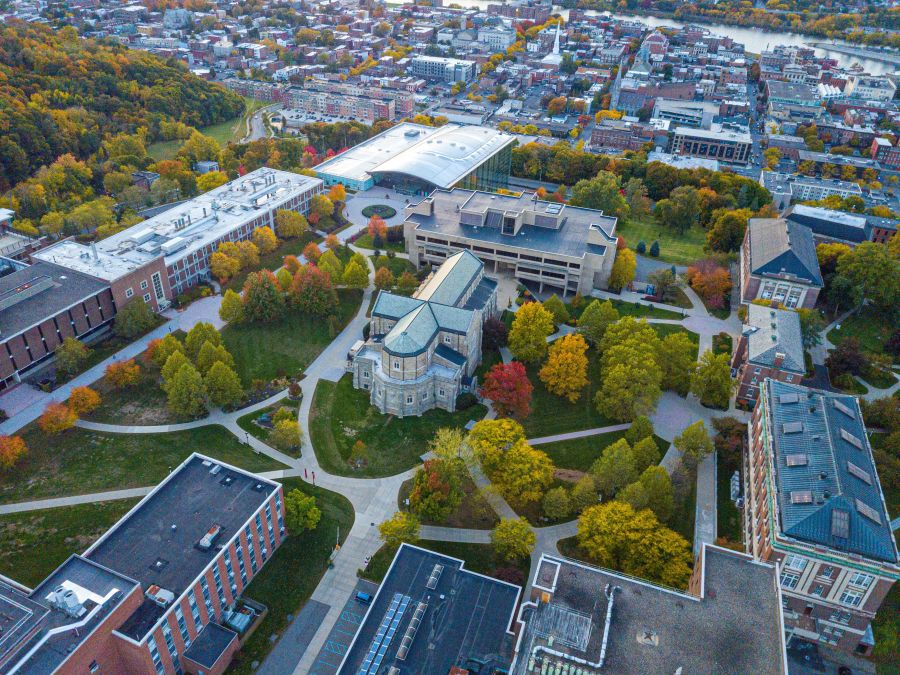
More usable capacity from the infrastructure already in place.
By shifting energy use away from peak periods, rechargeable buildings help unlock more usable capacity from existing infrastructure.
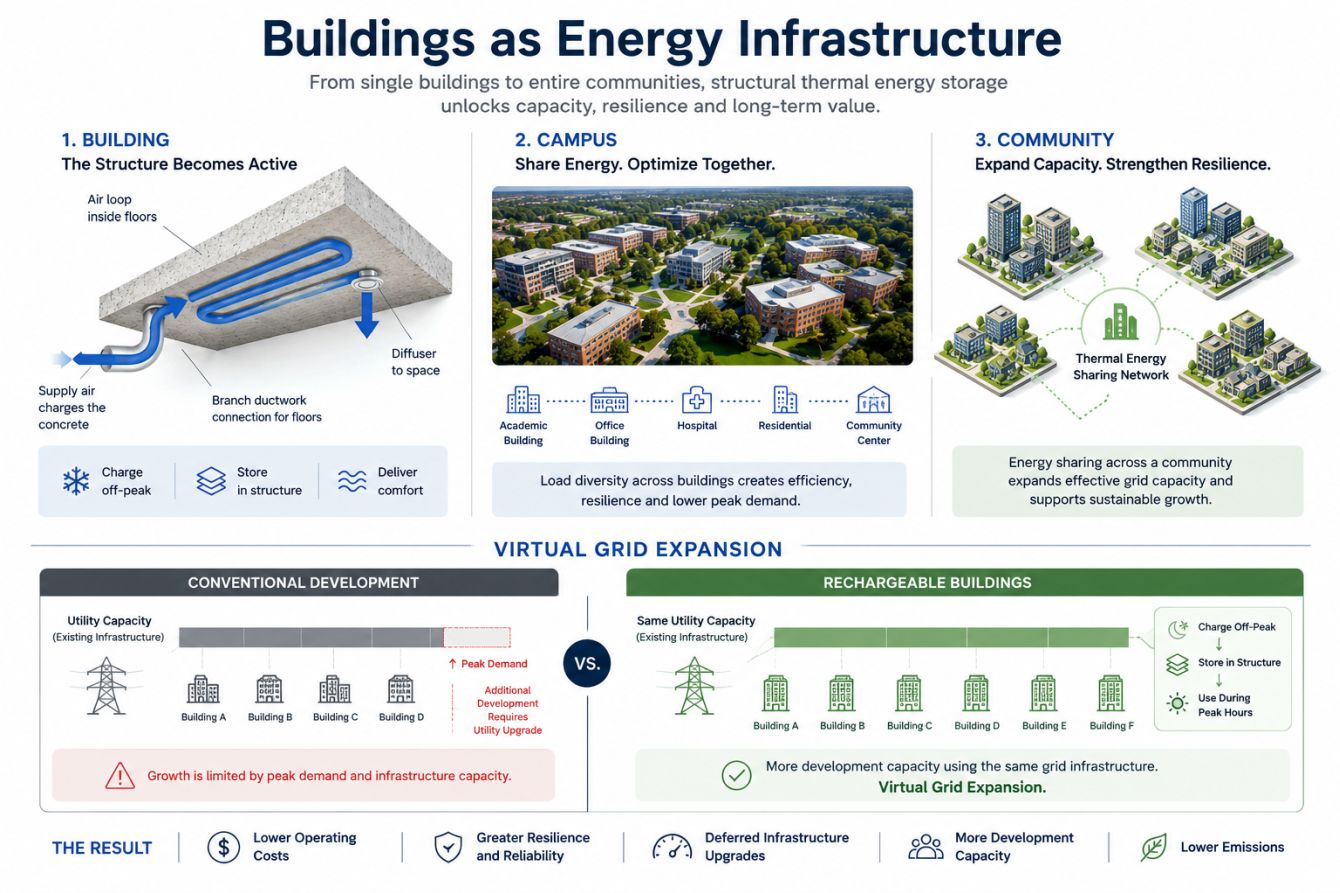
Buildings store energy. Campuses share it. Communities gain capacity.
As energy capacity becomes a constraint on growth, rechargeable buildings provide a new way to support campuses, districts, and communities using infrastructure more effectively.
Relevant for data centers, manufacturing, healthcare, and high-load campuses.
Termobuild complements core process systems by improving how the building stores, shifts, and manages energy.
Where this matters
- Data center office, support, and envelope spaces
- Advanced manufacturing and industrial facilities
- Healthcare and institutional campuses
- Master-planned and mixed-use developments
- District energy and microgrid strategies
Activate the structure you’ve already paid for.
Termobuild helps owners, developers, architects, engineers, and design-build teams evaluate where structural thermal energy storage can reduce peak demand, improve comfort, and create infrastructure value.