Affordability Is More Than Cost Per Square Foot
Affordable housing is not just about getting residents into a unit. It is about helping them stay there comfortably, affordably, and reliably for decades.
When housing is measured only by first cost, communities can miss the larger costs residents, owners, utilities, and public agencies carry over time.
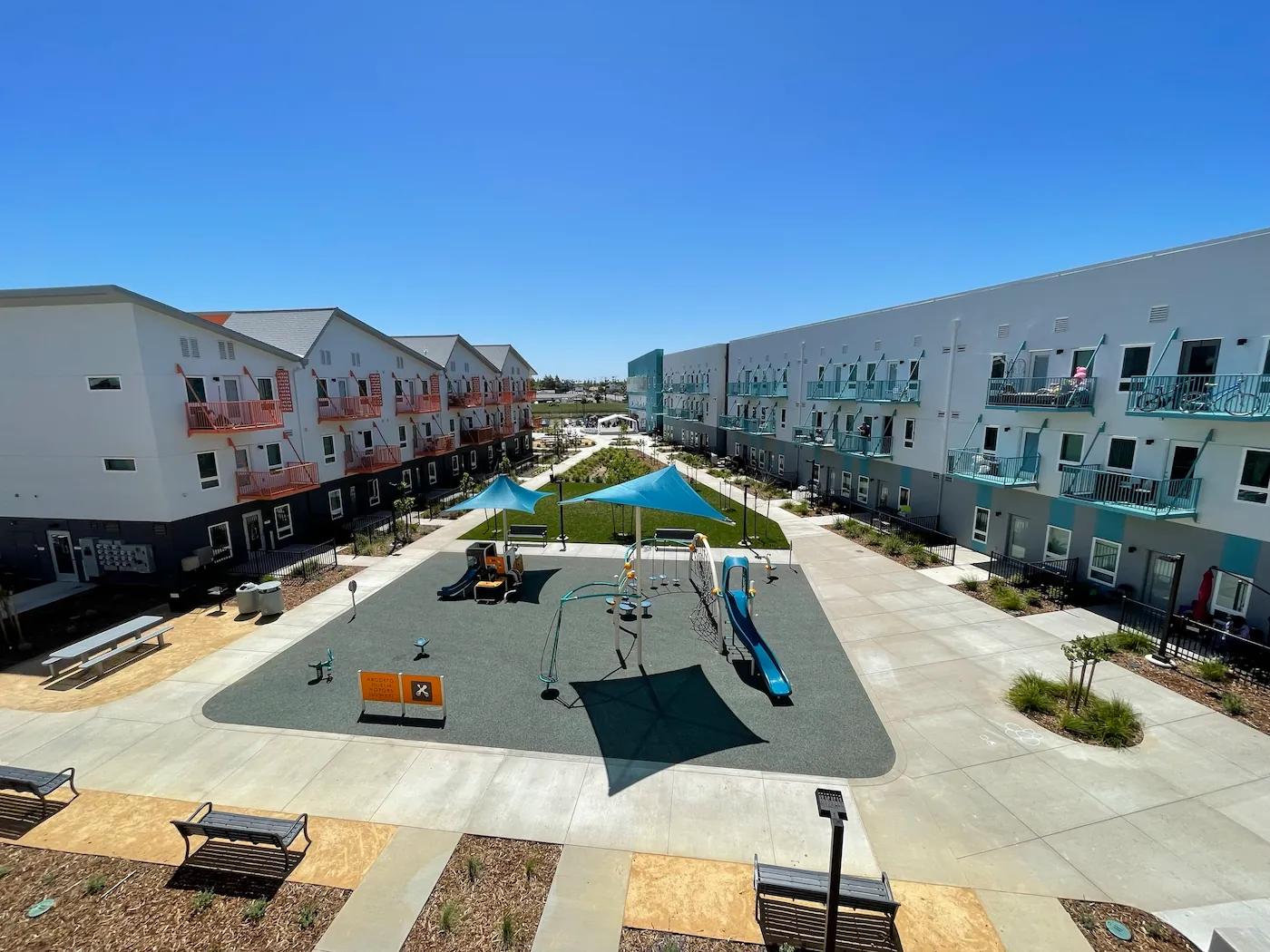
The lowest-cost building to construct is not always the most affordable building to own, operate, or live in.
Cost per square foot matters. But it does not capture utility burden, resident comfort, maintenance exposure, building lifespan, grid impact, or long-term community resilience.
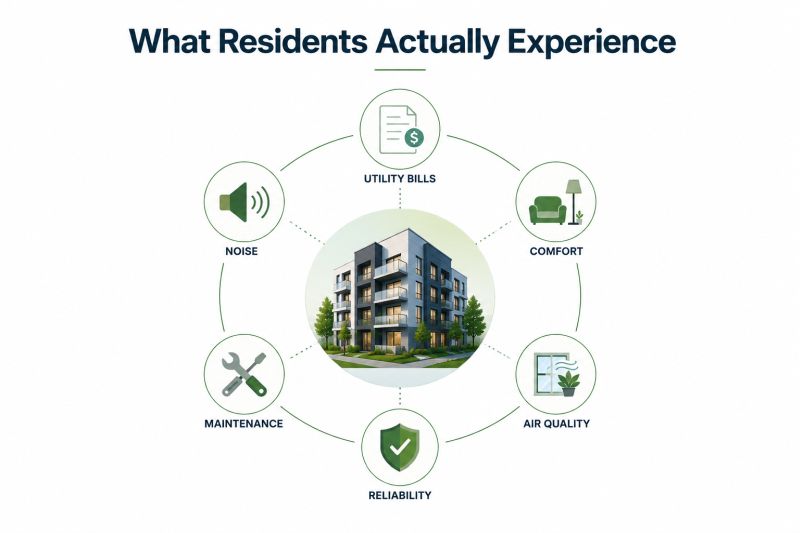
Residents Experience Monthly Costs
Affordability is felt through utility bills, comfort, indoor air quality, reliability, and maintenance disruptions.
Owners Carry Operating Burden
Mechanical complexity, repairs, energy demand, and shorter asset life can create costs long after construction is complete.
Communities Inherit Infrastructure Demand
Housing decisions affect electrical demand, resilience, public resources, and long-term infrastructure planning.
A better housing conversation starts with what happens after move-in.
Short-term savings can disappear quickly if residents face higher utility bills, buildings require more maintenance, or infrastructure demand increases across the community.
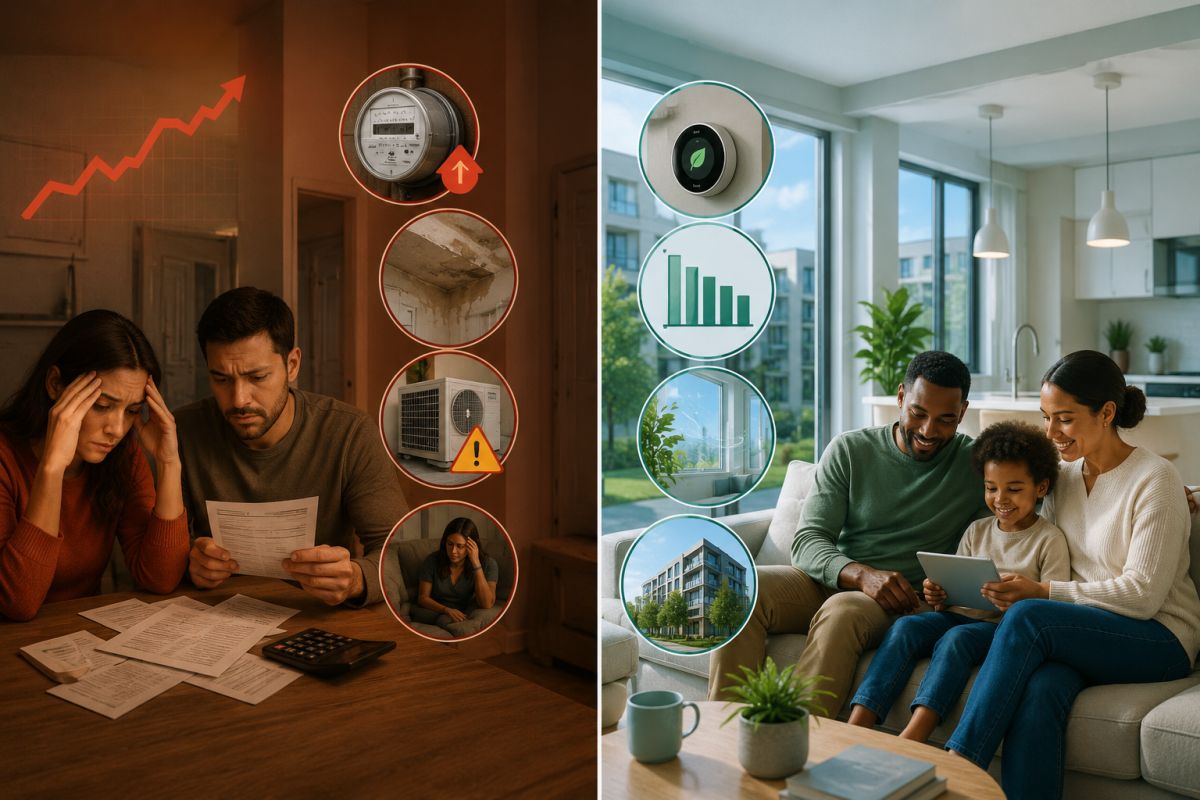
The Short-Term Approach
- Lowest upfront construction cost becomes the dominant measure
- Resident utility burden is treated as a separate issue
- Mechanical systems are added to solve comfort after the fact
- Peak demand and grid impact are pushed downstream
- Maintenance exposure grows over the life of the asset
The Smarter Approach
- Housing is evaluated by long-term operating performance
- Resident comfort and utility burden are part of the affordability strategy
- The building structure helps support comfort and energy performance
- Peak demand reduction becomes part of infrastructure planning
- Durable design preserves community investment over time
Residents do not experience affordability through a construction budget.
They experience it through the monthly cost of living, the stability of the indoor environment, the quality of the air they breathe, and the reliability of the home they depend on.
That is why long-term housing affordability should include comfort, utility burden, maintenance disruption, and resilience — not just the cost to deliver a unit.
See how radiant comfort and fresh-air ventilation work together.
Start measuring affordable housing by the outcomes that determine whether it stays affordable.
A stronger definition of affordability looks beyond the bid and considers the lifetime performance of the home, the owner’s operating burden, and the community systems that support it.
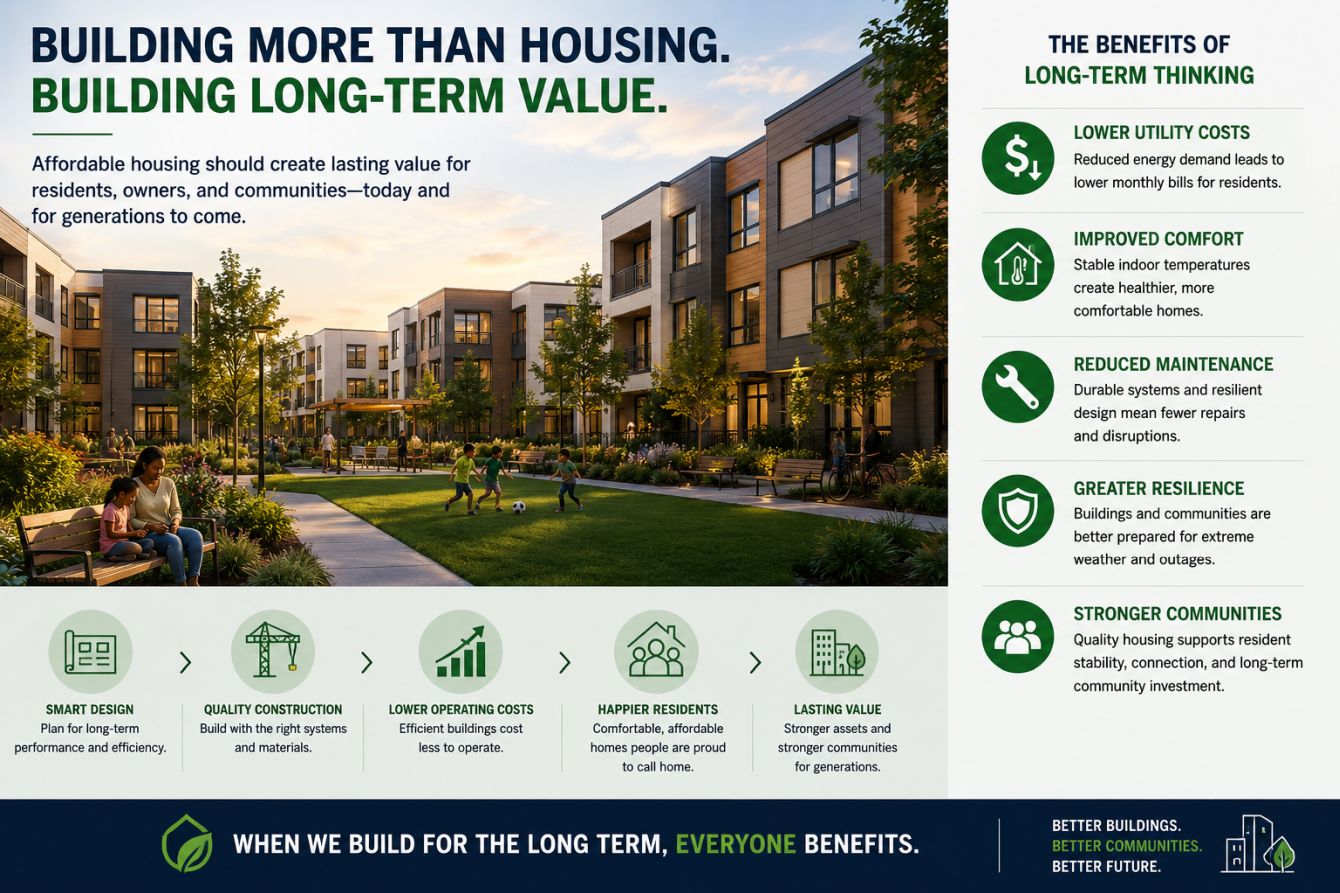
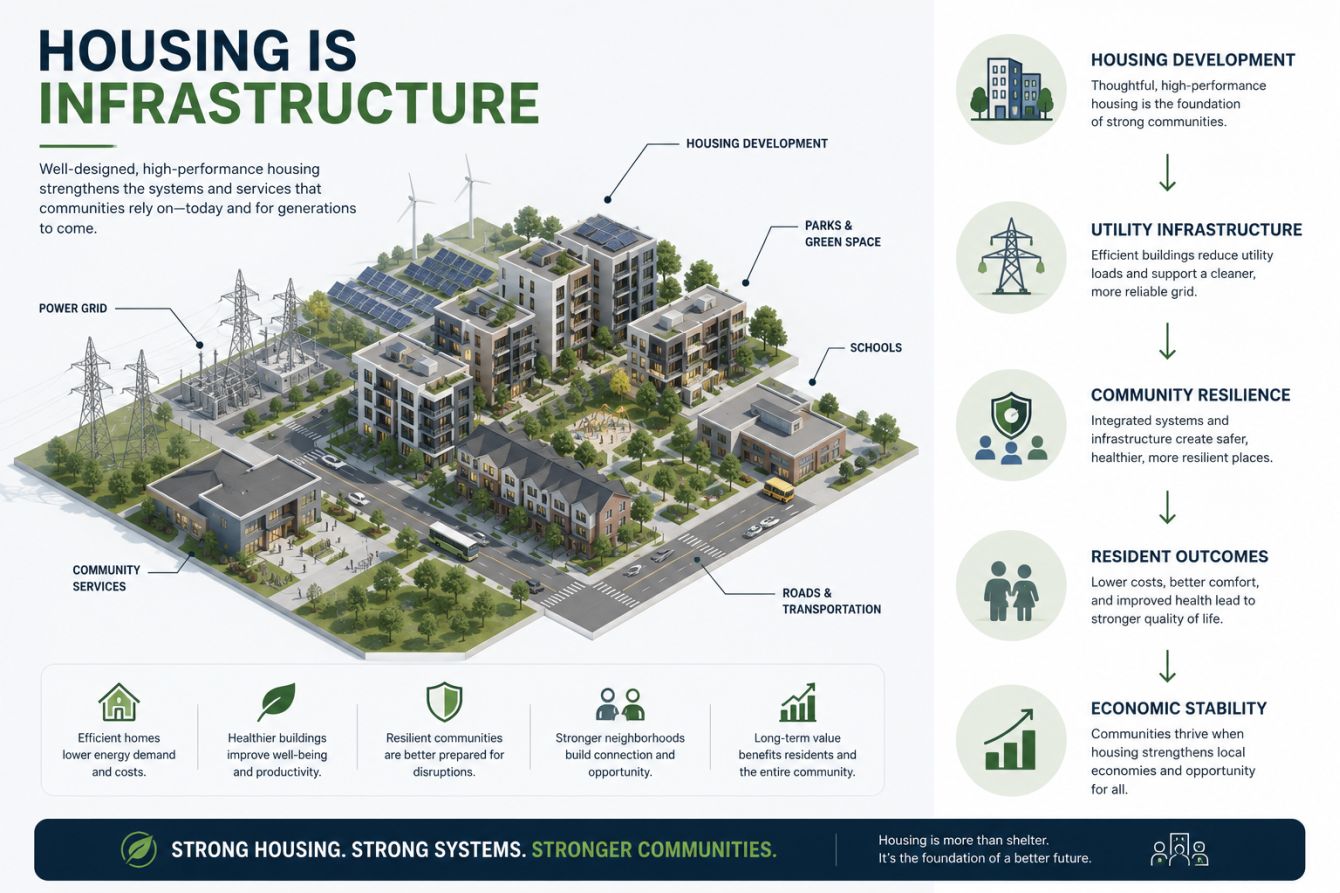
Every housing project becomes part of the community's long-term infrastructure.
Housing shapes energy demand, utility infrastructure, operating costs, health, comfort, and resilience for decades. That makes building performance a policy issue, not just a design issue.
When communities build housing that reduces peak demand, improves comfort, and lowers operating burden, they are not only building units. They are building infrastructure that supports long-term affordability.
Rechargeable housing supports long-term affordability by activating the structure already being built.
Termobuild helps housing projects use the concrete structure itself as active thermal energy storage. Rather than relying solely on mechanical equipment, the building becomes part of the energy strategy— helping store, shift, and deliver heating or cooling energy when it is needed most.
Activate Existing Structure
Use the concrete already being built as part of the building's thermal infrastructure instead of adding separate storage systems.
Shift Heating & Cooling Loads
Store thermal energy when demand and energy costs are lower, then release it later to support occupant comfort.
Reduce Mechanical Dependence
The structure helps carry part of the thermal workload, reducing reliance on additional equipment and system layers.
Improve Temperature Stability
Thermally active structures help maintain more consistent indoor conditions throughout the day.
Support Grid Flexibility
Buildings can reduce peak demand and help ease pressure on electrical infrastructure during high-demand periods.
Deliver Long-Term Value
By improving efficiency, comfort, and resilience, rechargeable housing helps support stronger long-term economics.
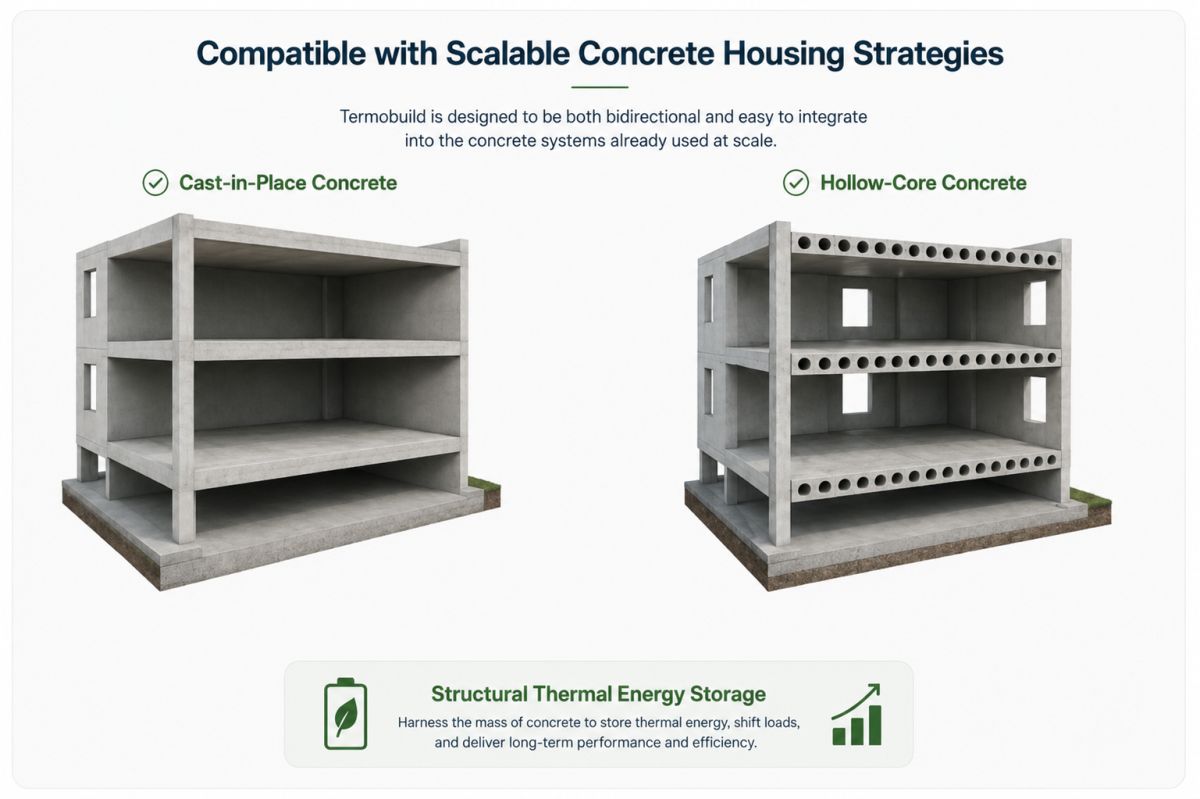
Compatible with scalable concrete housing strategies.
Termobuild is suitable for both hollow-core and cast-in-place concrete construction. The strategy is especially relevant for multifamily, workforce housing, affordable housing, mixed-use residential, and master-planned communities where repeatable construction matters.
The goal is not to add complexity. The goal is to make the structure already being built do more work for residents, owners, utilities, and communities.
The question is not simply: “What does housing cost to build?”
The larger question is: “What will housing cost residents, owners, utilities, and communities over the next 30 years?”
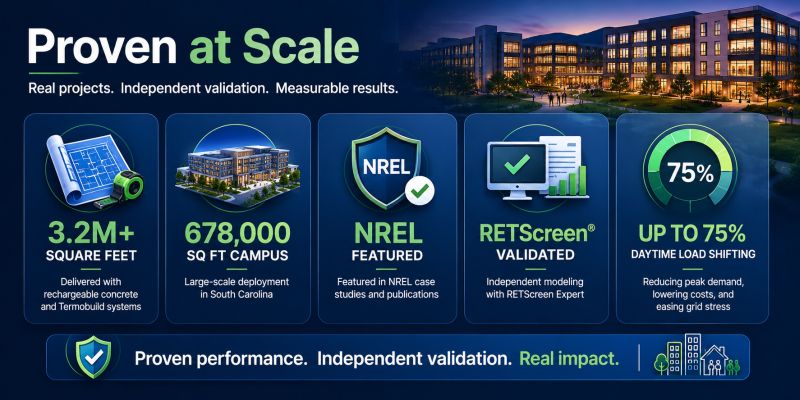
Real projects. Independent validation. Measurable results.
Structural thermal energy storage has been deployed in large-scale projects and independently evaluated through recognized organizations and modeling platforms.
Better affordability requires better buildings.
Affordable housing succeeds when residents can remain in their homes comfortably and affordably. That requires thinking beyond first cost and designing for long-term performance from the beginning.
For Housing Providers
Reduce operating burden while improving the resident experience and long-term asset value.
For Communities
Build housing that supports comfort, resilience, and lower infrastructure pressure.
For Developers & Planners
Evaluate housing through lifetime cost, performance, utility burden, and community value.
Build housing that remains affordable after residents move in.
Termobuild helps owners, developers, planners, and housing stakeholders evaluate how structural thermal energy storage can support resident comfort, lower utility burden, reduced peak demand, and resilient communities.