Hospital Building Performance Should Reduce Operational Risk
Healthcare leaders are planning facilities in an environment of rising energy cost, maintenance exposure, ventilation demands, and long-term capital pressure.
Termobuild helps hospitals use the structure itself as part of the thermal and ventilation strategy — supporting fresh air, radiant comfort, lower peak demand, and more predictable infrastructure performance.
Hospitals need safer, steadier, more financially resilient building infrastructure.
Subpar air quality, uneven temperatures, escalating utility costs, and maintenance burden are not just comfort issues. They affect operational risk, patient environments, staff conditions, and long-term financial sustainability.
For large hospitals and P3 healthcare projects, infrastructure decisions made early can shape cost, resilience, and performance for decades.
Lower Mechanical Dependency
Reduce oversized HVAC demand and simplify long-term infrastructure burden.
Predictable Infrastructure
Fewer added system layers can reduce maintenance exposure and operational complexity.
Ventilation & Patient Comfort
Fresh-air-first delivery supports healthier indoor environments and stable comfort.
Patient environments should feel stable, quiet, and less mechanically aggressive.
Healthcare spaces must support patients, staff, and visitors through continuous operation. Stable indoor conditions, reduced drafts, and more even comfort delivery can improve the feel of care environments without relying solely on reactive air systems.
Termobuild supports air-driven radiant heating and cooling by turning concrete floors and ceilings into active thermal infrastructure.

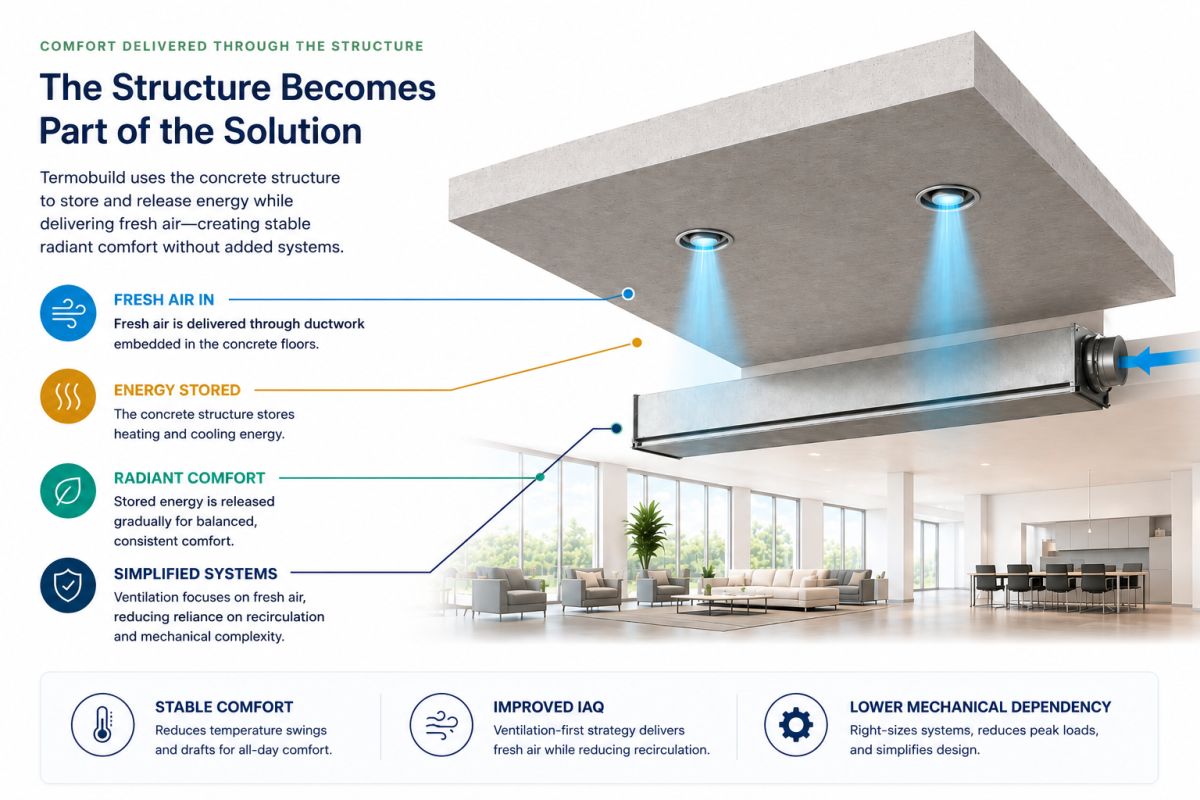
The structure becomes part of the hospital’s thermal strategy.
Termobuild pairs concrete floor and ceiling systems with HVAC to store and release heating or cooling energy over time.
Fresh air moves through the structure while the concrete helps manage thermal load, supporting stable comfort, ventilation, and lower mechanical dependency.
This is not just a technology upgrade. It is an infrastructure strategy.
Public-private partnership hospitals and large healthcare facilities often involve billions in capital planning. Reducing mechanical dependency, peak demand, and maintenance exposure can improve the long-term ownership profile of the building.
Avoided Equipment Burden
Reducing HVAC demand may help reduce equipment scope and the long-term maintenance tied to it.
Lower Operational Risk
More stable building behavior can help reduce dependency on oversized daytime mechanical response.
Long-Term Asset Value
Embedded thermal infrastructure can support comfort and energy performance without adding dedicated storage equipment.
Lower utility bills, predictable maintenance, fresh air, and radiant comfort belong in the same conversation.
Hospital performance is not one-dimensional. A better building strategy should connect energy use, ventilation delivery, patient environments, maintenance exposure, and long-term financial sustainability.
Hospital infrastructure should help manage risk year-round.
Healthcare facilities operate continuously through changing occupancy, seasonal ventilation demands, energy volatility, and maintenance cycles.
Termobuild helps shift part of the heating and cooling burden into the structure itself, supporting a more stable and resilient operating profile.
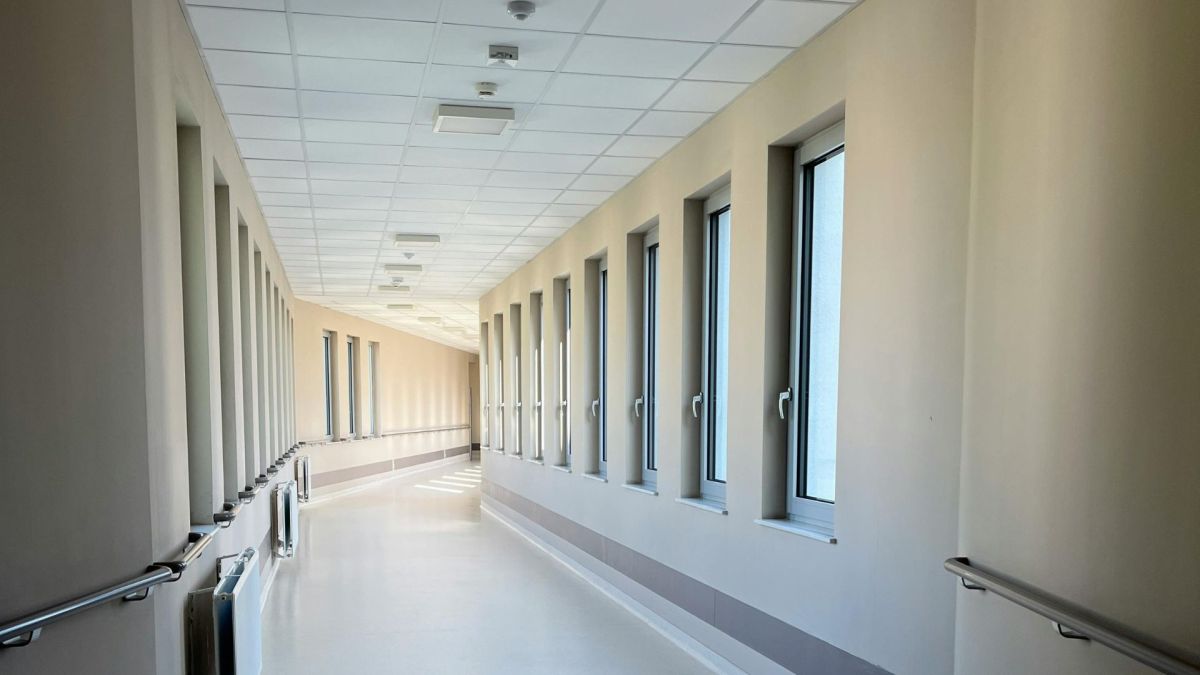
Before hospital infrastructure is locked in, evaluate what the structure can already do.
Structural thermal energy storage may influence HVAC sizing, ventilation strategy, peak demand, operating cost, maintenance exposure, and long-term capital planning.
Plan healthcare facilities that perform better over decades.
Termobuild helps healthcare owners, P3 teams, developers, and capital planners evaluate how structural thermal energy storage may improve fresh-air strategy, radiant comfort, utility performance, maintenance exposure, and long-term financial resilience.