Buildings That Feel Better to Be In.
Fresh air, stable comfort, quieter spaces, and calmer indoor environments should not require escalating mechanical complexity.
Termobuild integrates ventilation, thermal delivery, and the building structure to support fresher, more balanced indoor environments with lower dependence on conventional recirculation-heavy systems.
Ventilation changes how buildings feel.
Most buildings rely heavily on recirculated air and aggressive mechanical mixing. Termobuild approaches ventilation differently — delivering higher proportions of fresh outdoor air gently through the occupied environment while reducing drafts, noise, and mechanical intensity.
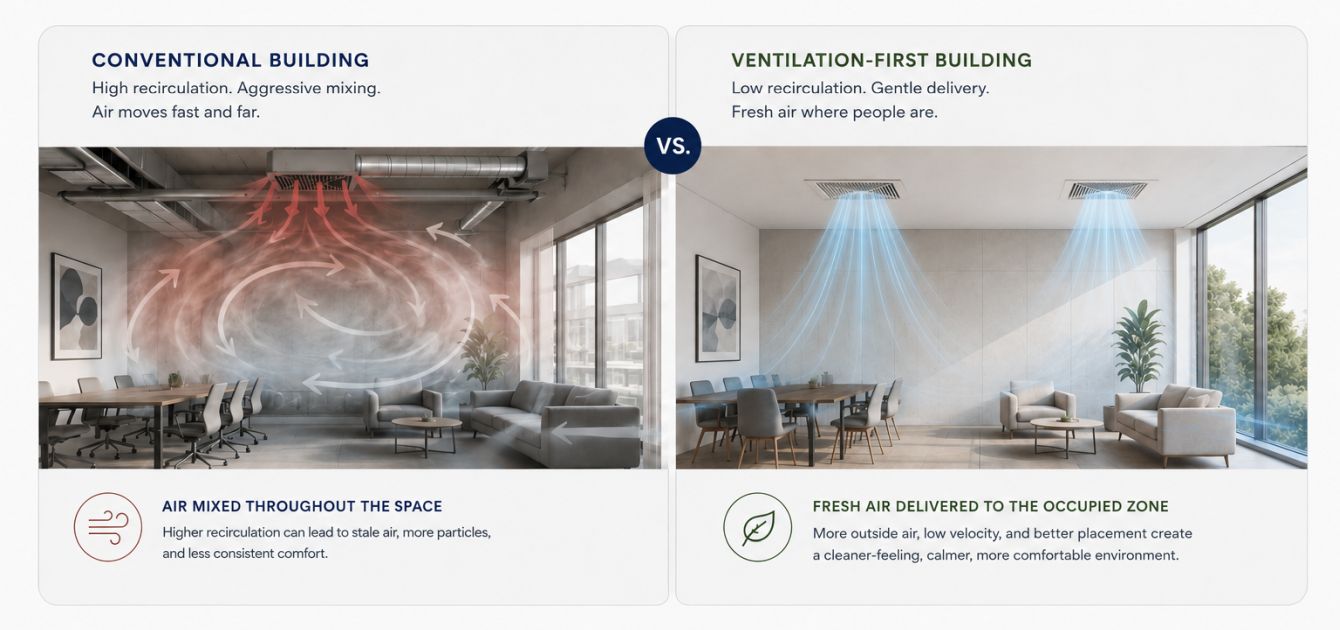
Fresh-air buildings should feel calm, balanced, and naturally comfortable.
A building’s indoor environment is shaped by more than temperature alone. The way air moves, how much is recirculated, how quietly it is delivered, and how stable the structure remains all influence how a space feels.
Termobuild helps align fresh-air delivery with thermal stability, so buildings can feel more connected to natural conditions rather than constantly fighting them mechanically.
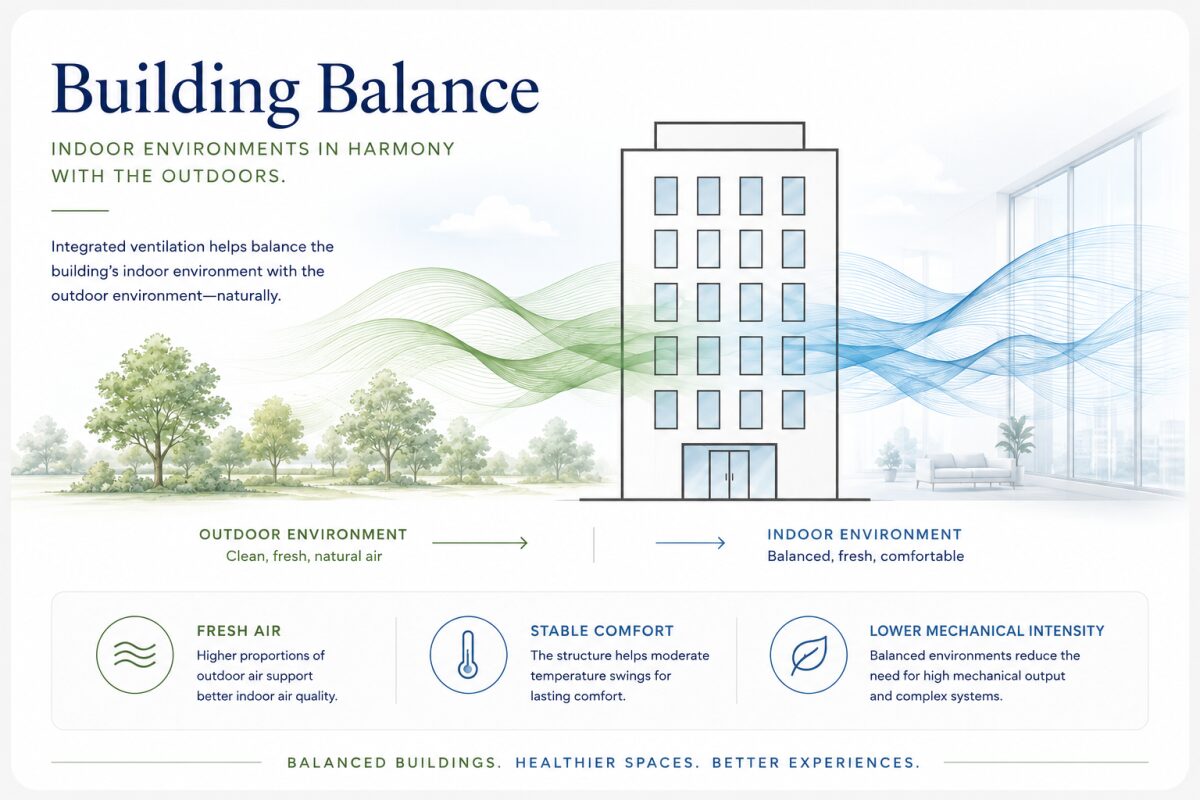
Why Reactive Ventilation Costs Millions
In traditional reactive buildings, ventilation systems are often forced to restrict fresh air because the energy required to heat or cool outside air becomes too expensive and mechanically intensive.
Air systems end up carrying heating, cooling, filtration, recirculation, ventilation, and comfort correction all at once — driving larger HVAC infrastructure, higher operating intensity, and more mechanically driven indoor environments.
Termobuild transforms the concrete structure itself into thermal energy storage, allowing the building to absorb and release thermal energy throughout the day instead of forcing ventilation systems to carry the entire burden alone.
This frees ventilation systems to focus on what they should do best: deliver fresh air, healthier indoor environments, and stable comfort with lower mechanical strain.
Higher outdoor-air strategies become more achievable when ventilation is no longer carrying the entire thermal burden alone.
The structure actively stabilizes indoor conditions, reducing the amount of conditioning work assigned to mechanical systems.
Lower-velocity air delivery can support quieter, less mechanically aggressive occupied spaces.
Fresh air, stable radiant comfort, and lower mechanical intensity create environments people are more likely to value long term.
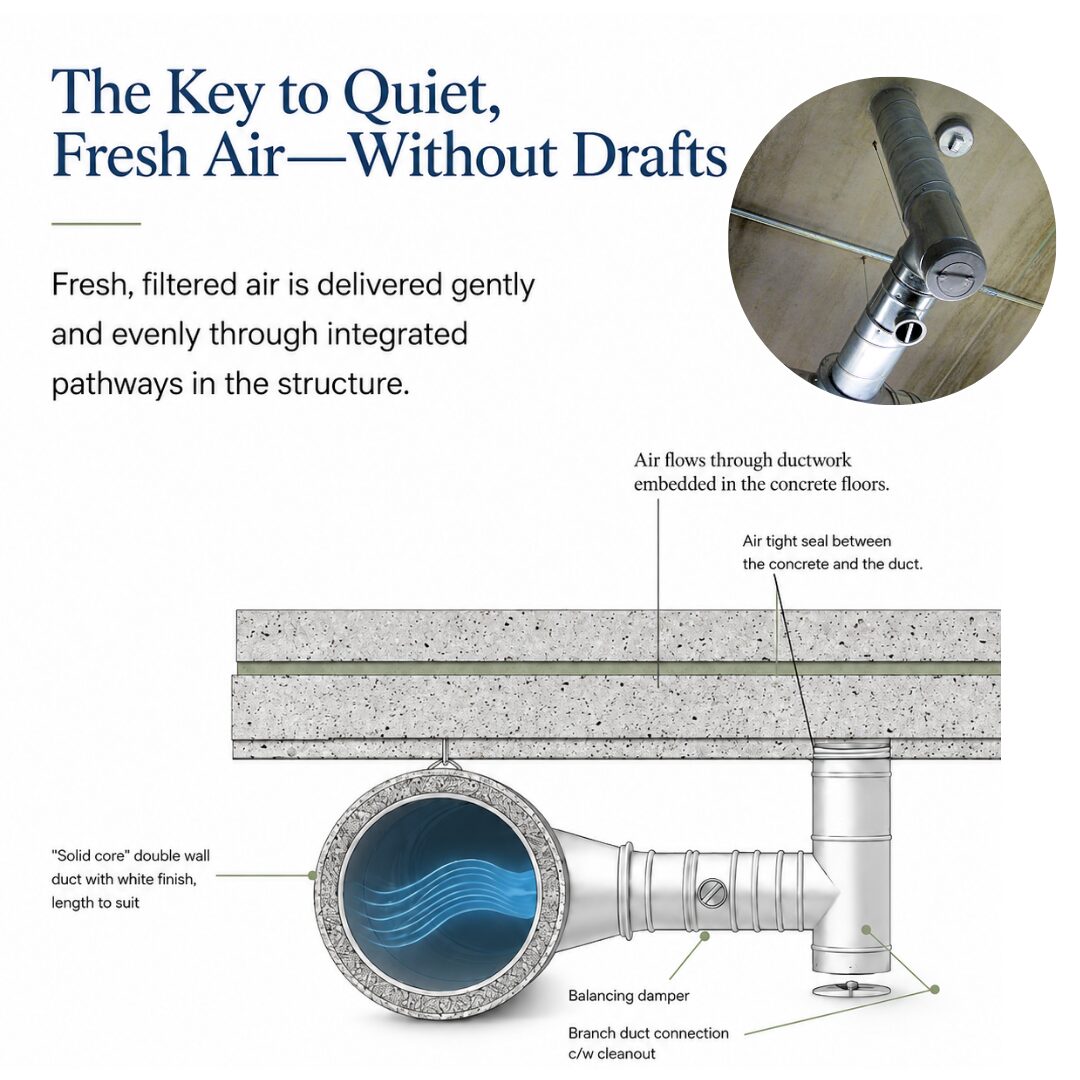
Fresh air delivered through the building — quietly and efficiently.
Termobuild uses the structure as part of the comfort and ventilation strategy. Fresh air can be distributed through integrated pathways and delivered at low velocity into occupied spaces.
Because the concrete structure also helps stabilize indoor conditions, ventilation does not have to carry the full heating and cooling burden by itself.
Comfort infrastructure, not just ductwork.
The structure becomes part of the indoor environment strategy — helping deliver fresher air, stable comfort, quieter spaces, and lower mechanical dependence.
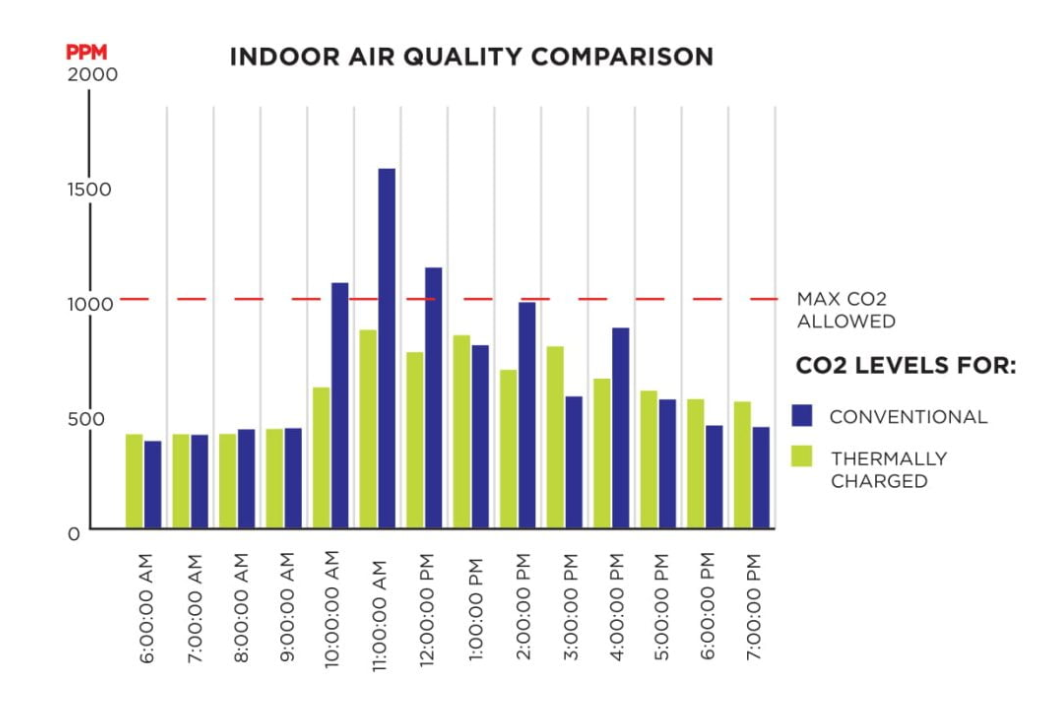
Fresh air supports better indoor environmental quality.
Higher proportions of outdoor air and lower recirculation dependence may support more stable indoor air conditions throughout occupied hours.
The goal is not to make the page a technical airflow study. The point is simpler: buildings that breathe better can feel better to occupy.
The best indoor environments do not feel mechanically forced. They feel fresh, calm, stable, and naturally comfortable.
See how ventilation-first comfort could apply to your building.
Termobuild helps project teams evaluate how structural thermal energy storage, fresh-air delivery, radiant comfort, and lower mechanical dependence may improve building performance and occupant experience.