Build Healthier Housing Faster
More housing is needed. But speed should not come at the expense of comfort, resilience, utility burden, or long-term infrastructure performance.
Compatible with both hollow-core and cast-in-place concrete construction, Termobuild uses the structure itself as thermal energy storage - storing and releasing heating or cooling energy while reducing mechanical complexity, peak demand, and long-term operating burden.
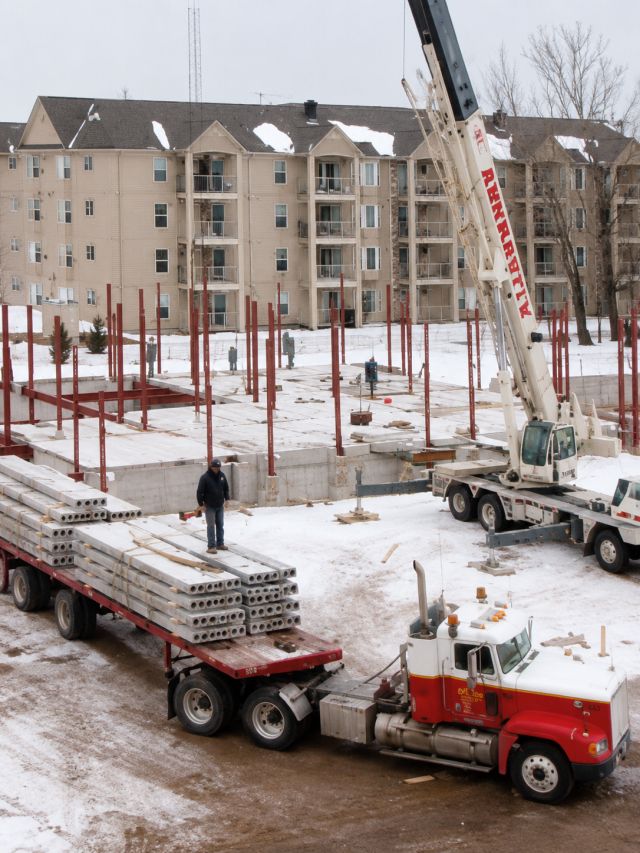
Building faster should not create long-term infrastructure burden.
Housing conversations often focus on approvals, financing, speed, and unit count. Those matter. But the buildings themselves will also shape energy demand, comfort, maintenance exposure, and grid impact for decades.
Less Mechanical Complexity
Using the structure as part of the thermal strategy can reduce dependence on oversized reactive HVAC response.
Healthier Indoor Conditions
Stable radiant comfort and fresh-air-oriented ventilation can improve the lived experience inside the home.
Lower Grid Impact
Reducing peak demand helps communities grow without adding unnecessary pressure to electrical infrastructure.
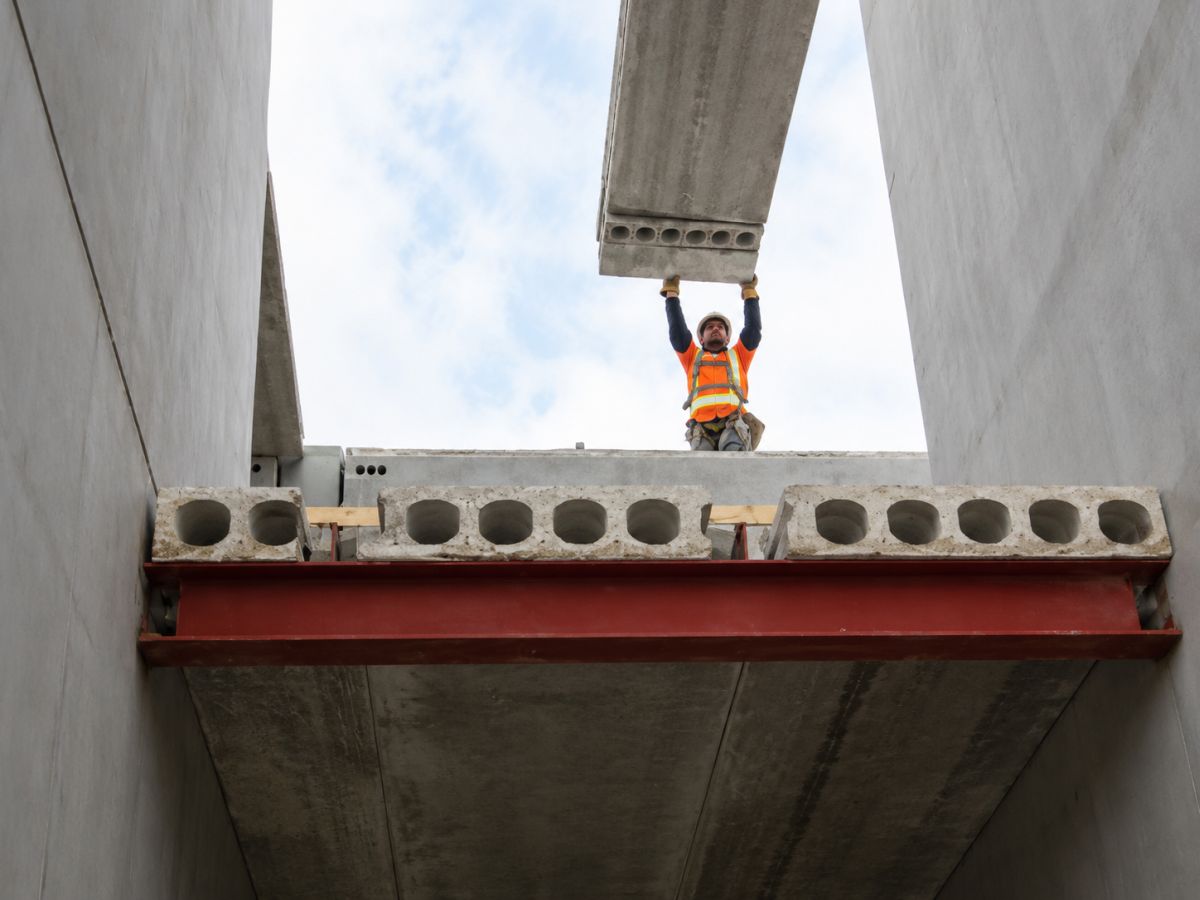
The best infrastructure may already be part of the building.
Multifamily • Workforce Housing • Affordable Housing • Mixed-Use Residential - does not have to depend only on more equipment, more controls, more batteries, or more mechanical complexity.
When the structure participates, the building can store and release thermal energy over time — improving comfort while reducing demand when it matters most.
Explore high-performance buildings that start with the structure.
The structure does the work.
Termobuild turns structural mass into active thermal storage. During favorable or off-peak periods, the structure is charged. During peak conditions, stored energy is released gradually to help stabilize comfort.
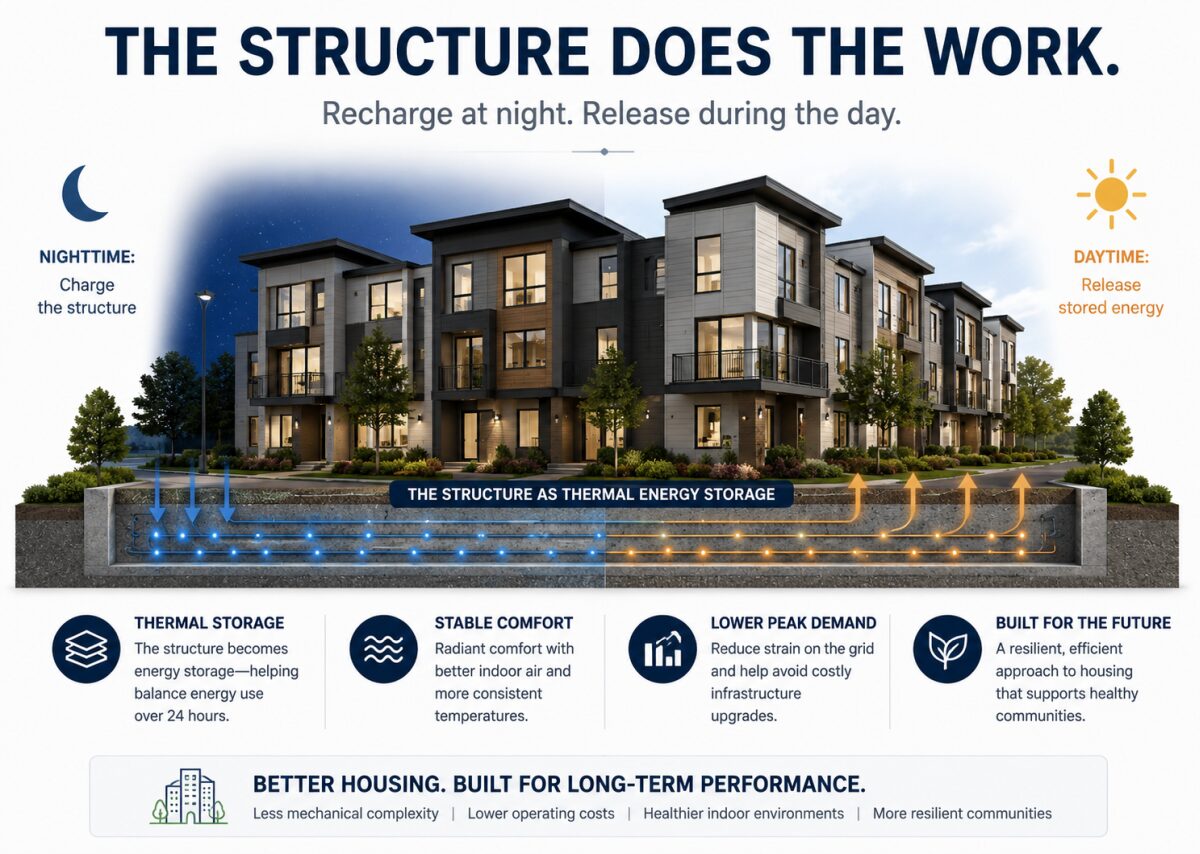
Housing can become part of the energy solution.
Peak demand drives infrastructure cost. When every home reacts at the same time, communities add stress to the grid. When buildings shift and reduce that demand, housing becomes part of the infrastructure strategy.
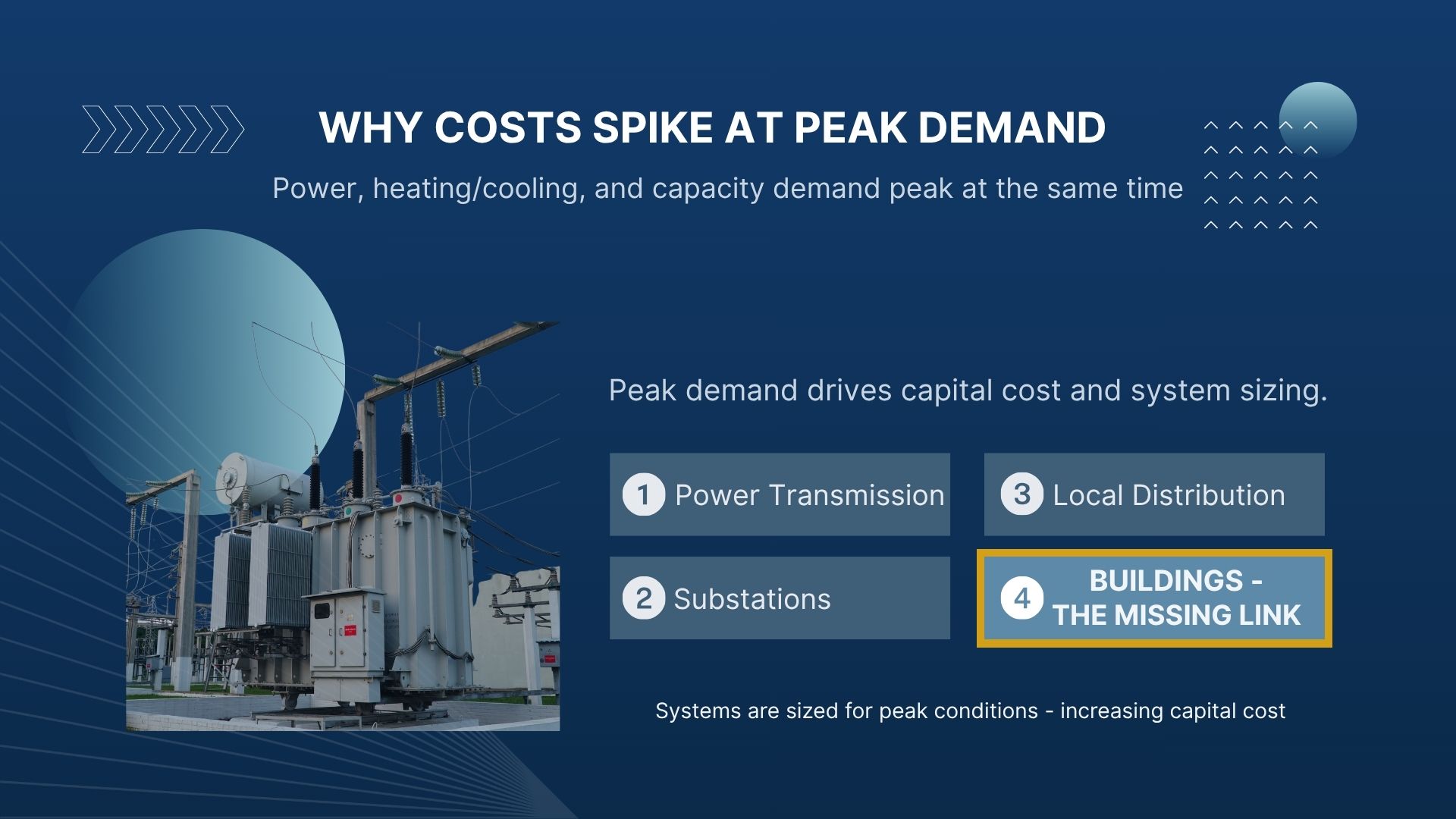
Lower Peaks
Reduce daytime demand spikes that drive system sizing and infrastructure cost.
Better Resilience
Thermal mass helps indoor conditions remain more stable as outdoor conditions change.
Simpler Systems
Use structural storage before layering on added equipment and storage infrastructure.
Faster housing should still feel better to live in.
Comfort, ventilation, and operating cost are not separate issues. In housing, they directly affect affordability, resident experience, and long-term building value.
Termobuild supports stable radiant comfort, better indoor air strategy, quieter operation, and reduced dependence on constant mechanical response.
See how radiant comfort and fresh-air ventilation work together.
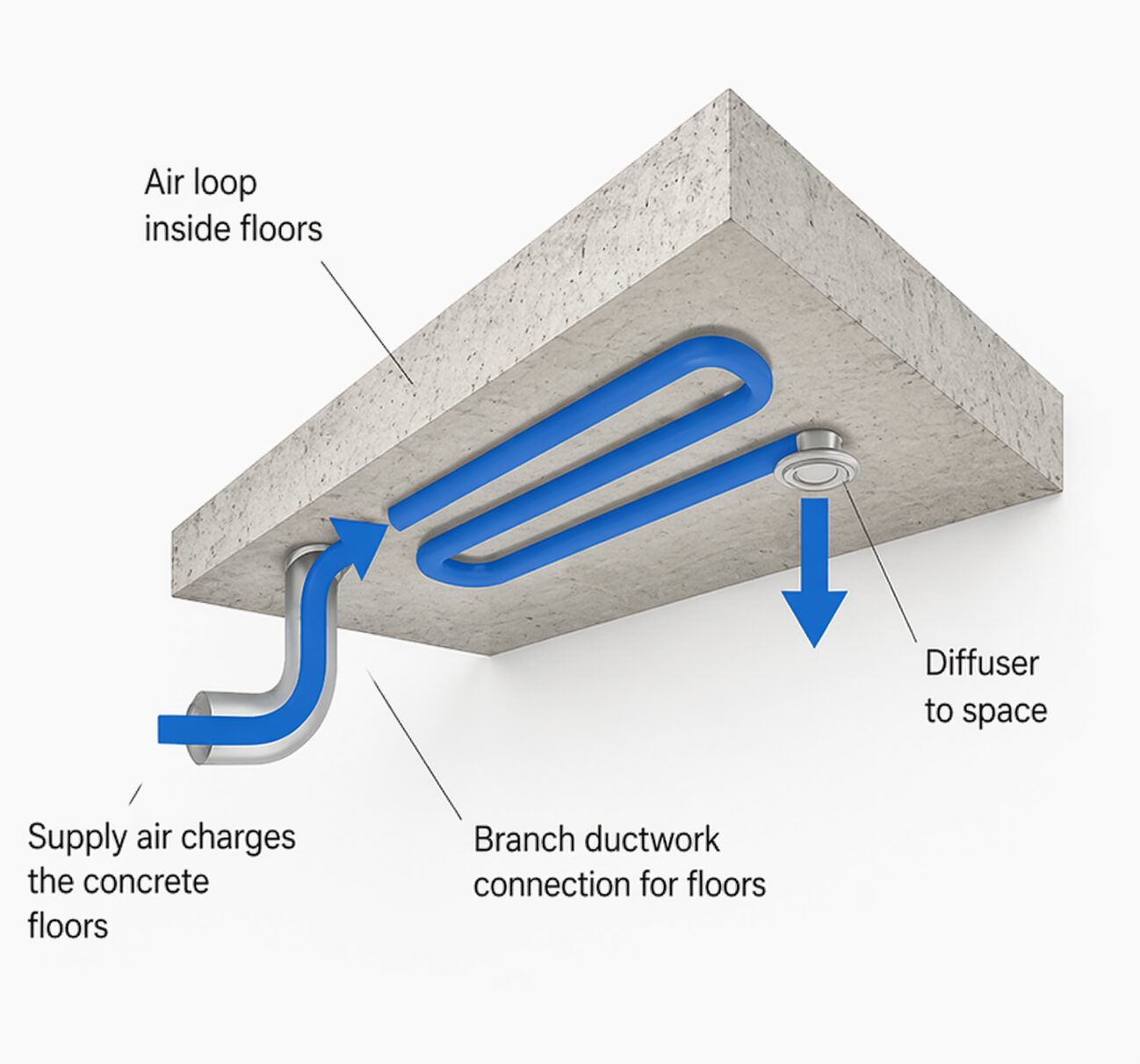
Air moves through the structure, storing energy in concrete.
Termobuild connects standard air distribution to concrete floor or ceiling systems. The structure stores heating or cooling energy and releases it gradually to support stable comfort.
This allows buildings to shift load, reduce peak demand, and support better indoor environments without adding dedicated thermal storage tanks.
Performance at scale is not just about energy savings.
When hundreds or thousands of homes are built, small infrastructure decisions compound. Better housing strategy can reduce mechanical burden, peak demand, maintenance exposure, and long-term operating friction.
Ask what the buildings themselves can already do.
Housing policy, development strategy, and infrastructure planning often treat buildings as energy consumers. Termobuild changes that frame: buildings can become part of the energy strategy.
For Developers
Improve performance while reducing unnecessary system complexity and long-term operating exposure.
For Communities
Build housing that supports comfort, resilience, and reduced infrastructure pressure.
For Utilities & Planners
Reduce peak loads before adding more generation, distribution, or storage capacity.
Built with familiar structural systems.
Termobuild is not about adding a separate building system after the fact. It is about activating concrete structure that is already part of many scalable housing strategies.
That makes the idea especially relevant for multifamily, townhomes, master-planned communities, and large-scale residential programs where repeatable construction matters.
Build healthier housing faster — without adding long-term infrastructure burden.
Termobuild helps owners, developers, planners, and project teams evaluate how structural thermal energy storage may improve comfort, reduce peak demand, simplify mechanical systems, and support resilient communities.