Better Outcomes.
Without the Usual Compromises.
Lower capital requirements. Reduced peak energy demand. Lower operating costs. Greater comfort and thermal resilience. What if better building performance didn't have to mean more equipment, complexity or expense?
Why should better performance require more?
More equipment. More mechanical complexity. Higher construction costs. Greater maintenance obligations.
Those tradeoffs are often treated as the price of a better building. But the biggest opportunity may be in using what the building already has — its structure — more intelligently.
Better isn't one metric. It's the whole building.
Termobuild connects capital efficiency, energy management and the occupant experience — instead of treating them as competing priorities.
Lower Initial Investment
Potentially reduce HVAC capacity and associated infrastructure by designing the building and mechanical strategy together.
Explore capital efficiency →Reduce the Peak
Store heating or cooling in the concrete structure so less mechanical output is needed during peak periods.
See how storage works →Lower Energy & Operating Costs
Manage when energy is used, reduce thermal loads and improve operating economics from the start.
Explore operating economics →Less to Maintain
Potentially reduce equipment quantity, servicing requirements and future replacement exposure.
See what you may not need →More Stable Comfort
Use large concrete surfaces and active thermal mass to support quiet, even indoor conditions.
Explore radiant comfort →Built-In Thermal Stability
Stored thermal energy helps moderate indoor temperature changes when loads or operating conditions shift.
Explore thermal resilience →Spend less to build.
Less to operate. Less to maintain.
The value of a building strategy shouldn't stop at the construction budget. It should continue through every year of ownership.
Capital Efficiency
Potential savings in mechanical equipment, electrical capacity and supporting infrastructure at project delivery.
Operating Efficiency
Lower energy consumption, reduced peaks and the ability to shift thermal loads when energy is more favorable.
Lifecycle Value
Less equipment to maintain and potentially fewer major replacements, alongside improved long-term building performance.
Demand-charge savings depend on the utility tariff; time-of-use savings depend on applicable rates. Maintenance and replacement savings depend on the final mechanical design.
Stop treating every load as an emergency.
Conventional mechanical systems must respond to heating and cooling needs as they arise. Active thermal storage adds the ability to prepare the building ahead of time.
The Conventional Approach
Structure and HVAC are largely treated as separate systems.
- Heating and cooling loads develop
- Mechanical systems respond in real time
- Equipment is sized to meet demanding peaks
- The concrete's thermal capacity is largely unmanaged
The Termobuild Approach
Structure, air distribution, HVAC and controls become one coordinated thermal strategy.
- Anticipate upcoming conditions
- Charge the building's concrete mass
- Store heating or cooling capacity
- Let the structure carry part of the load
- Reduce reliance on peak mechanical output
Same structure.
Different strategy.
Termobuild integrates air-driven thermal energy storage with concrete floors and standard HVAC systems. Conditioned air travels through designed pathways in the floor, transferring thermal energy to and from the concrete.
The structure can then help stabilize occupied spaces and reduce the need for immediate mechanical heating or cooling.
No dedicated thermal-storage tanks. No separate hydronic floor system. The building's own mass becomes a managed energy asset.
Explore how Termobuild works →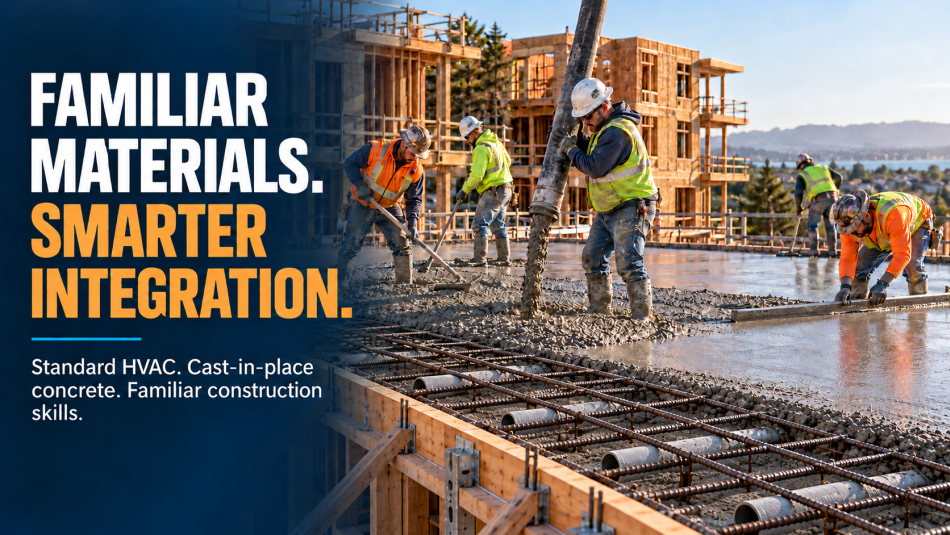
Choose better for the building you're creating.
The economics, comfort priorities and operating demands vary. The opportunity to make the structure do more remains.
 Commercial & Institutional
Better Building Economics at Scale
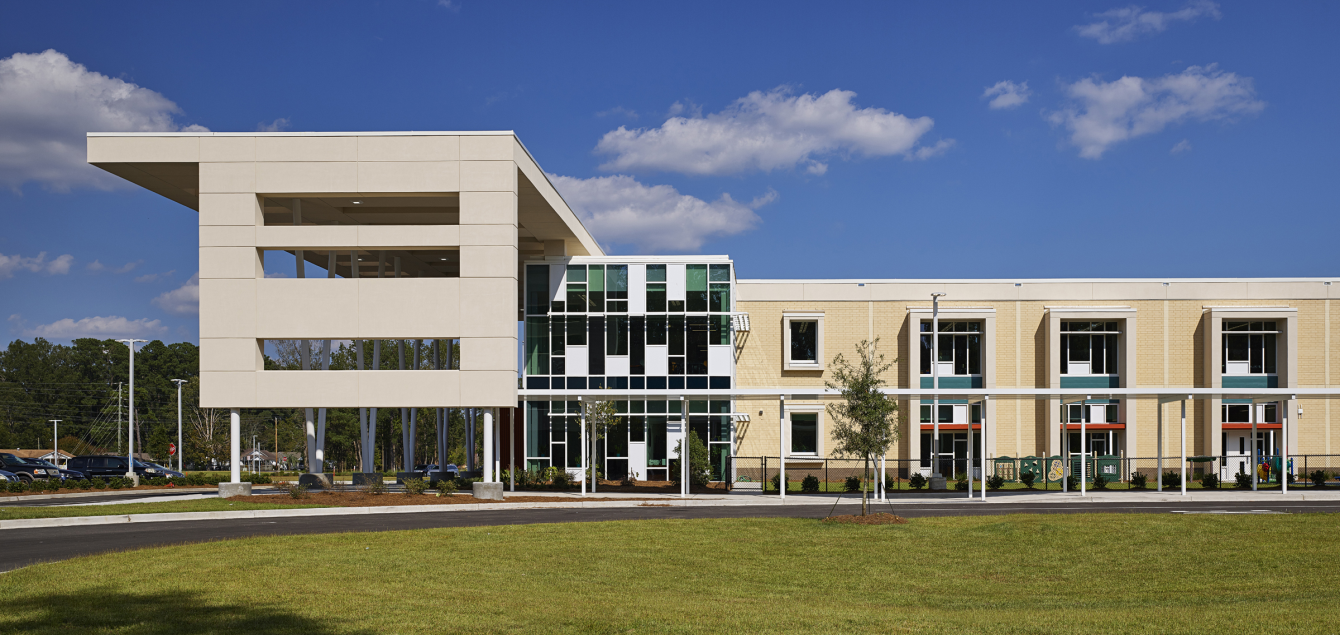
For schools, hospitals, higher education, offices and other facilities, the priority may be reducing first cost, peak demand, energy consumption and long-term infrastructure obligations.
Explore the financial impact →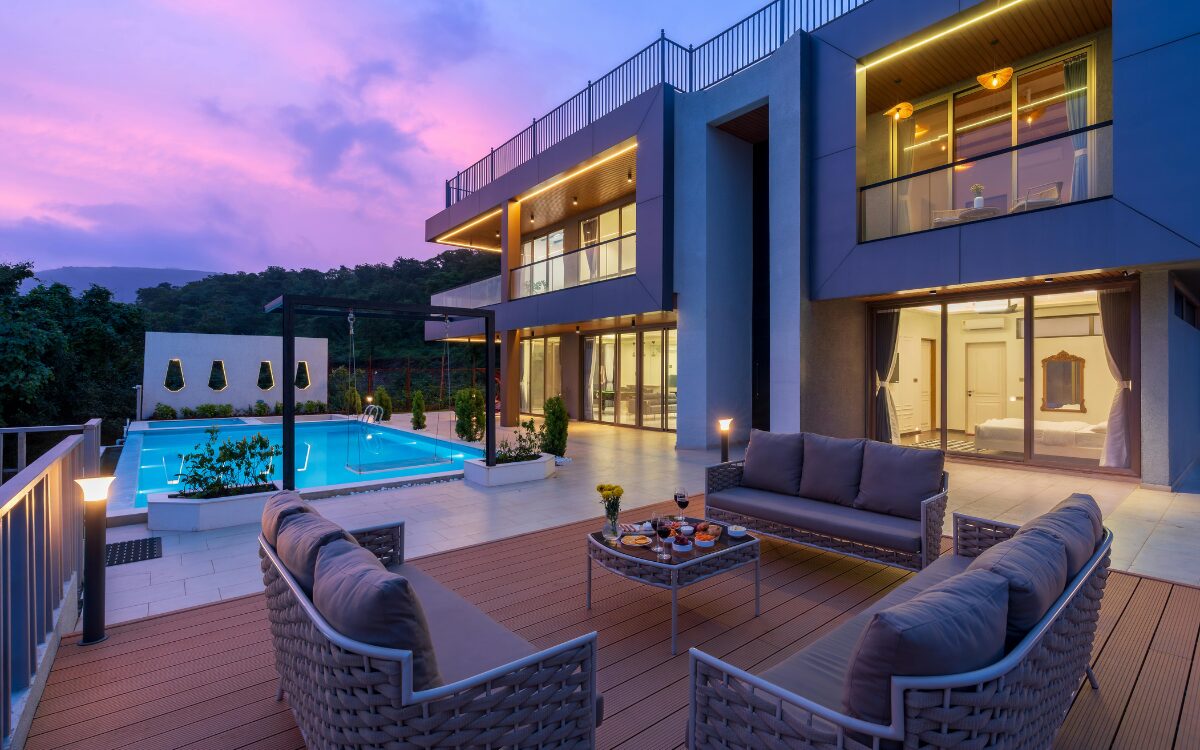 Residential & Communities
Better Comfort. Better Ownership.
For individual homes and residential communities, combine stable radiant comfort and lower energy use with the potential for lower mechanical costs and stronger long-term value.
Explore residential opportunities →Better outcomes need more than a promise.
Termobuild's approach has been applied to completed buildings, including school projects where capital and mechanical-system impacts have been evaluated.
Every project is different. The right question is which outcomes the strategy can deliver for your building, climate, utility rates and construction approach.
For example, the reported 9.7% capital-cost reduction relates to a South Carolina K–12 program; it is a project-specific result, not a standard saving or a projection for other buildings.
Review the financial impact →The building already exists in the plan. What else can it do?
Before adding equipment, complexity or cost, explore what the structure itself can contribute to capital efficiency, energy performance, comfort and long-term value.
Evaluate Your ProjectWhat You Don't Have to BuildProject outcomes are application-specific and depend on climate, construction method, mechanical design, controls, utility tariffs and operating assumptions. Numerical results shown are project-specific examples, not guarantees for other buildings.